High Bay LED Lighting
 Industrial Low Bay Lighting
 Industrial Strip Lights
 Vapor Tight Lighting
 LED Shop Lights
 LED Ready Fixtures
 Hazardous Area / Explosion Proof Lighting
 Loading Dock Lights
 Construction / Portable Lighting
 High Temperature LED Lights
 Industrial Ceiling Fans
 LED Work Lights
 Networked Controlled Lighting
 American Made Industrial Lighting
 Clearance
 Troffer Lights
 LED Flat Panel Lights
 Drop Ceiling Lights
 LED Ready Troffers
 Suspended LED Lights
 LED Cylinder Lights
 Stairway & Corridor Lighting
 Hospital Bed Lights
 Wrap Lighting Fixtures
 Gooseneck and Barn Lights
 Commercial Sign Lights
 LED Track Lighting Fixtures & Systems
 Recessed Lighting
 Wafer Lighting
 RGB LED Lights
 Exit / Emergency
 Refrigeration Lighting
 Grow Lights
 UV Disinfecting Lights & Air Purifier Fixtures
 American Made Commercial Lighting
 LED Flood Lights
 Outdoor Wall Lights
 LED Area Lights
 Parking Lot Lights & Poles
 Outdoor Post Top Lights
 LED Stadium Lighting
 Canopy Lights
 Security & Motion Sensor Lights
 LED Bollard Lights
 Outdoor Barn Lights
 Solar Powered LED Lighting
 Dusk to Dawn Lights
 Landscape Lighting
 Outdoor String Lights
 Coastal Wildlife Lighting
 Outdoor House Lights
 American Made Outdoor Lighting
 Architectural Linear Lights
 Architectural Grid Mount Lights
 Architectural Round Pendant Lights
 Architectural Curved LED Linear Lights
 Architectural Square Linear Lights
 Architectural X-Shaped Linear Lights
 Architectural LED Wall Packs
 Ceiling Fans
 Ceiling Lights
 Chandelier Lights
 Pendant Lighting
 Island Lights
 Under Cabinet Lighting
 Vanity Lights
 Wall Sconces
 LED Tape Lights
 LED Mirrors
 LED Light Bulbs
 LED Tube Lights
 LED Corn Lights
 Vintage LED Bulbs
 Decorative LED Bulbs
 Fluorescent Light Bulbs
 Metal Halide Lamps
 LED Magnetic Strip Retrofit Kits
 LED Strip Light Retrofit Kits
 High Bay LED Retrofit Kits
 LED Troffer Retrofit Kits
 LED Wall Pack Retrofit
 LED Street Light Retrofit Kits
 Recessed Lighting LED Retrofit Kits
 WareSense Blue - Bluetooth Control System
 Ballasts & Drivers
 Emergency Ballast For LED & Fluorescent Lights
 Electrical Supplies & Mounting Kits
 Electrical Tools
 Switches & Receptacles
 Electrical Power Cords
 Sensors and Timers
 Smart Home Automation
 High Bay Occupancy Sensors
 Electric Vehicle Chargers
 Hand Dryers
 LED Shop Lights
 Garage LED Lighting
 Gym Lighting
 Factory Lights
 Restaurant Lights
 Office Lights
 Classroom Lights
 Church Lights
 Warehouse Lights
 Hospital Lights
 Walkway Lights
 Parking Lot Lights
 Exterior Building Lights
 Sports Lighting
 Airport Lights
 NSF Rated Lights
 TAA LED Lighting
 Corridor Lights
 Barn Lighting
 Multi-Family Lighting Solutions




Start With the Basics: The High Bay Lighting Formula
The core formula for estimating how many LED high bay fixtures you need is:
Number of Fixtures = (Square Footage × Required Foot-Candles) ÷ (Lumens per Fixture)
Let's break that down into plain language.
- Square footage: The area you're lighting (length × width)
- Required foot-candles (FC): The area you're lighting (length × width)
- Lumens per fixture: The lumen output of the high bay you're using
This formula gives you a starting estimate. It's a solid baseline, but real-world results depend on much more.
Required Foot-Candles by Application
One of the biggest variables is what's happening in your space. A warehouse storing bulk pallets has very different lighting needs than a manufacturing floor where workers read labels or operate precision equipment.
Here are general foot-candle targets by application type:
| Application | Recommended Foot-Candles (FC) |
| General Warehouse/Bulk Storage | 10–20 FC |
| Manufacturing/Assembly (General) | 20–50 FC |
| Precision Manufacturing/Inspection | 50–100 FC |
| Automotive/Body Shop Work | 50–100 FC |
| Gymnasium/Recreation | 30–50 FC |
| Distribution Center/Picking Aisles | 20–30 FC |
| Cold Storage/Freezer warehouse | 20–30 FC |
Note: These are widely accepted baselines from IESNA (Illuminating Engineering Society of North America) guidelines. If you're working in a regulated environment, such as food processing or healthcare-adjacent facilities, it's worth confirming the exact standard for your industry.
How Ceiling Height Affects Your Fixture Count (and Wattage)
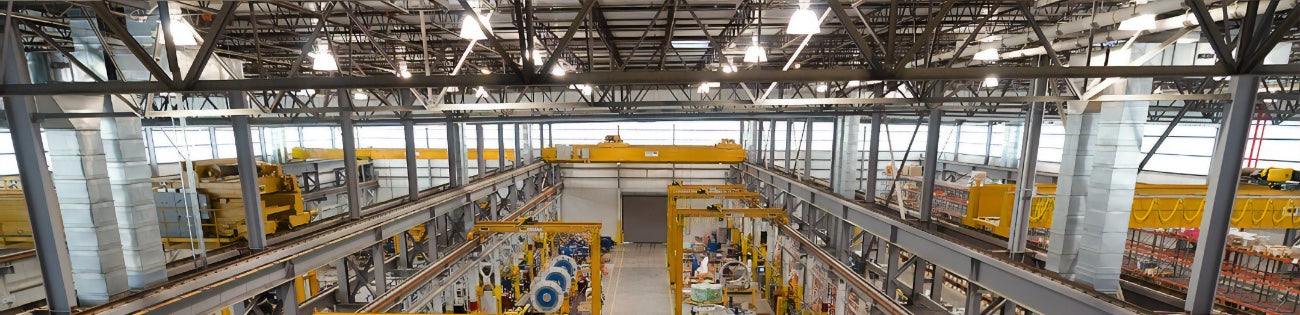
Ceiling height is probably the single biggest variable most people underestimate. A 200W UFO high bay at 20 feet produces a very different floor-level light distribution than that same fixture at 35 feet.
As a general rule:
| Ceiling Height | Recommended Fixture Type | Typical Wattage Range |
| 10-15 ft | Low Bay or Linear High Bay | 60-100w |
| 15-20 ft | Linear or UFO High Bay | 100-150w |
| 20-30 ft | UFO High Bay | 150-240w |
| 30-40 ft | High-Output UFO High Bay | 240-320w |
| 40 ft+ | High-Output UFO With Narrow Optic |
320w+ |
Note: Higher ceilings mean more spread and more light loss before it reaches the floor. That's why fixture spacing, beam angle, and mounting height all need to be factored in together, not just wattage or lumens alone.
A Working Example: 10,000 sq ft Warehouse, 25 ft Ceilings
Let's say you're lighting a 10,000 sq ft general warehouse (100 ft × 100 ft) with 25-foot ceilings. You need around 20 foot-candles at the floor.
You've selected a 200W UFO high bay producing 26,000 lumens with a CU of 0.75.
Calculation:
- Total lumens needed: 10,000 sq ft × 20 FC = 200,000 lumens
- Effective lumens per fixture: 26,000 × 0.75 = 19,500 lumens
- Fixtures needed: 200,000 ÷ 19,500 = ~10.3 fixtures
So you'd round up to 11 fixtures, and then lay them out in a grid pattern. In this case, something like a 4×3 arrangement with fixtures spaced roughly 25 feet apart.
Pro Tip: Keep in mind this is a baseline. The lighting design experts at Warehouse Lighting can help you refine your calculations to account for specific fixture beam angles, interreflection from walls and floors, and aisle/rack configurations.
Variables That Can Throw Off Your Estimate
Even a solid formula can be undermined by a few overlooked factors:
- Reflectance values. A white-walled distribution center with a polished concrete floor will naturally amplify your light levels. A dark powder-coated industrial environment with black racking absorbs light like a sponge. CU can swing from 0.65 to 0.90+ based on this alone.
- Rack height. In a racking warehouse, the light has to get down to pick-level, not just to the floor. If aisles are 20 feet tall with 6-inch clearance at the top, you may need to think about aisle-oriented fixtures or supplemental lighting at lower heights.
- Natural daylight. Skylights or clerestory windows can reduce the number of fixtures you need during daytime hours, which is especially relevant if you're adding occupancy sensors and daylight harvesting controls.
- Fixture spacing-to-mounting-height ratio. Most high bay fixtures have a recommended spacing-to-mounting-height (S/MH) ratio of 1.0–1.5. Exceed that and you'll get dark spots between fixtures. Go too tight, and you're overspending with diminishing returns.
- Optics and beam angle. UFO high bays typically come in 60°, 90°, and 120° beam angles. Narrower beams concentrate light at greater distances; wider beams give more even coverage at lower heights. Choosing the wrong optic for your mounting height is a common mistake.
When To Pull in a Lighting Design Expert
This calculator approach works well for getting a ballpark number and building a quote. But for complex spaces, such as multi-level racking, facilities with compliance requirements, oddly shaped footprints, or high-precision work areas, a proper photometric layout is worth the time.
Contact us at Warehouse Lighting for free lighting layout assistance and estimates that take your space into account. A short conversation can save you from ordering the wrong quantity or the wrong fixture altogether.
Choosing Between UFO and Linear High Bay Fixtures
Once you have an estimate, you still need to pick the right style of fixture, and that choice affects your spacing, coverage, and the final fixture count.
In most open-warehouse applications, UFO fixtures are the workhorses. For manufacturing lines, assembly areas, or any area with defined aisles, linear high bays often win on uniformity.
UFO High Bays
UFO high bays are compact, round fixtures ideal for open-floor spaces with higher ceilings. They produce a symmetrical light distribution and work well in a grid layout. A standard UFO high bay typically ranges from 15,000 to 25,000+ lumens and is designed to replace 320-400W HID fixtures, making them a straightforward upgrade for facilities still running older metal halide or HPS systems.


Linear High Bays
Linear high bays distribute light in a long, rectangular pattern, making them a natural fit for aisles, shelving rows, and rectangular bays. They tend to provide better uniformity in racking-heavy environments. Most linear high bays available today range from 11,000 to 21,000+ lumens depending on wattage selection, and are built to replace legacy T5HO fluorescent or 250-400W HID fixtures.
Don't Forget the Controls
The fixture count is only part of the energy equation. Adding high bay occupancy sensors can reduce energy consumption by 30–50% in spaces that aren't occupied 24/7. Many of Warehouse Lighting's high bay fixtures are compatible with 0-10V dimming drivers and sensor integration right out of the box.
If you're managing a larger facility, it's also worth exploring networked lighting control options through WareSense Blue, a Bluetooth-based control system that lets you zone and schedule lighting without running additional control wiring.
Get Free Lighting Layout Assistance From Warehouse Lighting
If you're planning a lighting upgrade for an office, coworking space, or commercial interior, Warehouse Lighting's suspended linear fixtures offer a proven solution that combines performance, efficiency, and modern design. Explore the full product lineup or connect with a lighting specialist to design a solution tailored to your space.
Whether you're illuminating a single-facility retrofit or bidding a new construction project, the experts at Warehouse Lighting can help you get it right.
FAQs: LED High Bay Lighting Calculator
Can I use the same high bay wattage for a 15-foot ceiling that I'd use for a 30-foot ceiling?
Technically, you can install the same fixture at both heights, but you probably shouldn't. A 200W high bay at 15 feet will almost certainly over-light the space and waste energy, and depending on the beam angle, it might create uncomfortable glare at eye level. At lower ceiling heights (10–20 ft), you're generally better served with 60–100W fixtures, or even switching to low bay fixtures, which are designed for that mounting range.
Do LED high bay lumens degrade over time, and should I account for that when calculating how many I need?
Yes, this is called Lumen Maintenance. LED fixtures lose some output over their lifespan, typically reported as L70 (the point at which they drop to 70% of initial lumens) or L90. Quality LED high bays carry L70 ratings of 50,000–100,000+ hours. If your facility needs to maintain a minimum foot-candle level throughout the fixture's life, some designers add a Light Loss Factor (LLF) into the calculation, typically 0.85–0.95 for LED, to account for this gradual reduction. It's rarely a dealbreaker, but it's a real variable in precision applications.
What's the difference between lumens and foot-candles, and which one should I use when specifying fixtures?
Lumens measure the total light output of the fixture itself. Foot-candles (or lux, in metric) measure the illuminance at a specific surface (how much of that light actually lands on your floor or work plane). When you're specifying fixtures, you need both: lumens tell you what the fixture produces, but foot-candles tell you whether your space will be lit to the level you need. Always spec to your target foot-candle level, and use lumens as the tool to get there.