 High Bay LED Lighting
 Industrial Low Bay Lighting
 Industrial Strip Lights
 Vapor Tight Lighting
 LED Shop Lights
 LED Ready Fixtures
 Hazardous Area / Explosion Proof Lighting
 Loading Dock Lights
 Construction / Portable Lighting
 High Temperature LED Lights
 Industrial Ceiling Fans
 LED Work Lights
 Networked Controlled Lighting
 American Made Industrial Lighting
 Clearance
 Troffer Lights
 LED Flat Panel Lights
 Drop Ceiling Lights
 LED Ready Troffers
 Suspended LED Lights
 LED Cylinder Lights
 Stairway & Corridor Lighting
 Hospital Bed Lights
 Wrap Lighting Fixtures
 Gooseneck and Barn Lights
 Commercial Sign Lights
 LED Track Lighting Fixtures & Systems
 Recessed Lighting
 Wafer Lighting
 RGB LED Lights
 Exit / Emergency
 Refrigeration Lighting
 Grow Lights
 UV Disinfecting Lights & Air Purifier Fixtures
 American Made Commercial Lighting
 LED Flood Lights
 Outdoor Wall Lights
 LED Area Lights
 Parking Lot Lights & Poles
 Outdoor Post Top Lights
 LED Stadium Lighting
 Canopy Lights
 Security & Motion Sensor Lights
 LED Bollard Lights
 Outdoor Barn Lights
 Solar Powered LED Lighting
 Dusk to Dawn Lights
 Landscape Lighting
 Outdoor String Lights
 Coastal Wildlife Lighting
 Outdoor House Lights
 American Made Outdoor Lighting
 Architectural Linear Lights
 Architectural Grid Mount Lights
 Architectural Round Pendant Lights
 Architectural Curved LED Linear Lights
 Architectural Square Linear Lights
 Architectural X-Shaped Linear Lights
 Architectural LED Wall Packs
 Ceiling Fans
 Ceiling Lights
 Chandelier Lights
 Pendant Lighting
 Island Lights
 Under Cabinet Lighting
 Vanity Lights
 Wall Sconces
 LED Tape Lights
 LED Mirrors
 LED Light Bulbs
 LED Tube Lights
 LED Corn Lights
 Vintage LED Bulbs
 Decorative LED Bulbs
 Fluorescent Light Bulbs
 Metal Halide Lamps
 LED Magnetic Strip Retrofit Kits
 LED Strip Light Retrofit Kits
 High Bay LED Retrofit Kits
 LED Troffer Retrofit Kits
 LED Wall Pack Retrofit
 LED Street Light Retrofit Kits
 Recessed Lighting LED Retrofit Kits
 WareSense Blue - Bluetooth Control System
 Ballasts & Drivers
 Emergency Ballast For LED & Fluorescent Lights
 Electrical Supplies & Mounting Kits
 Electrical Tools
 Switches & Receptacles
 Electrical Power Cords
 Sensors and Timers
 Smart Home Automation
 High Bay Occupancy Sensors
 Electric Vehicle Chargers
 Hand Dryers
 LED Shop Lights
 Garage LED Lighting
 Gym Lighting
 Factory Lights
 Restaurant Lights
 Office Lights
 Classroom Lights
 Church Lights
 Warehouse Lights
 Hospital Lights
 Walkway Lights
 Parking Lot Lights
 Exterior Building Lights
 Sports Lighting
 Airport Lights
 NSF Rated Lights
 TAA LED Lighting
 Corridor Lights
 Barn Lighting
 Multi-Family Lighting Solutions




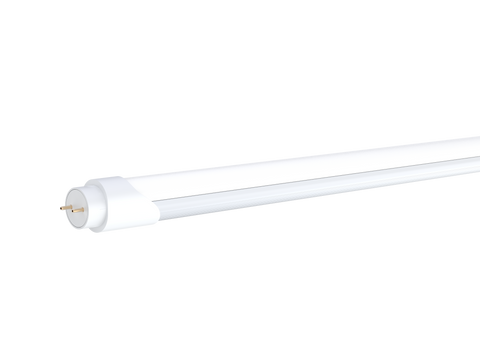
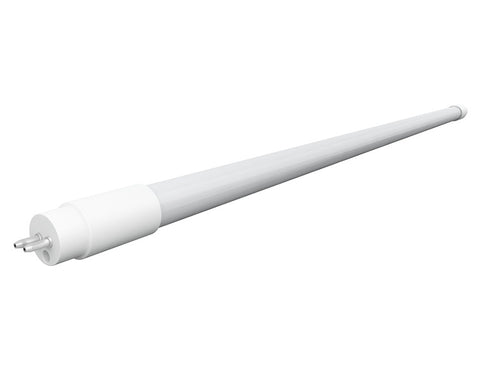
If you're trying to light a warehouse, manufacturing plant, office building or other large space, you may be grappling with whether to choose T5 vs. T8 light bulbs.
When you compare T5 and T8 bulbs, there are a few important things to keep in mind. We'll explore the difference between T5 vs. T8 lighting, how it's used and why WarehouseLighting.com is the place to find the best quality light bulbs for the job.
Defining T5 and T8 Light Bulbs
To understand your lighting choices, let's first discuss what the letters and numbers mean in this type of lighting. The "T" refers to "tubular," which is the shape of the bulb, while the number represents a fraction in eighths of an inch.
This means a T5 bulb is tubular and is 5/8" in diameter, while a T8 bulb is also tubular and is 8/8" (meaning 1") in diameter.
Are the Lengths of the Bulbs Comparable?
T8 bulbs come in standard 2-, 3-, 4- and 5-foot lengths. Comparable T5 bulbs are slightly shorter than T8 bulbs. Make sure you check your existing fixture carefully because the two types of bulbs are not interchangeable.
Lumen Output Capabilities
Another factor that separates T5 vs. T8 bulbs is the lumen – or "light output" – capability. For example, a standard 4 foot, 54-watt T5HO linear tube will usually yield around 5,000 lumens per tube, whereas a standard 4 foot, 32-watt T8 tube will offer approximately 3,000 lumens per tube.
T5 comes in two versions: standard T5 at 28W and roughly 2,900 lumens on a 4-foot lamp, and T5HO — high output — at 54W and roughly 5,000 lumens. Most "T5 vs T8" comparisons are really about T5HO.
What Type of Fixture Are You Using?
You'll typically find T5 and T8 light bulbs in linear high bay lighting, vapor tight high bay lights, and strip light fixtures.
When considering this difference between the two tube options, it is important to keep in mind the lighting application requirements of your space.
The lesser wattage T8 would be the better choice if you do not need as many lumens since it offers lower lumen and watt consumption. If you need higher lighting levels, the T5 might be ideal for your situation.
Color Temperatures
When choosing linear bulbs of this type, there are several other factors you need to consider. For instance, both T5 and T8 tubes are available in various color temperature choices.
This plays just as big of a role as the lumen output. For example, suppose you are considering fluorescent tubes for use in an office setting. You will naturally want to select either a lower lumen output, a warmer color temperature, or perhaps both, depending on the area. Using excessive lumen output or a cooler color temperature in an office can lead to complaints.
We generally recommend a color temperature of 5,000 to 6,500 Kelvin in an industrial or warehouse setting. But in an office setting, something like 4,000 to 5,000 might be more appropriate.
Once you have decided on your color temperature and lumen output needs as well as your budget, deciding between a T5 or T8 bulb solution will be much easier to navigate.
Price Gap
T5 bulbs tend to be two to three times more expensive than T8 bulbs — making cost an important consideration. However, T5 lamps produce just as much (or more) light in a smaller area as the T8 while using significantly fewer bulbs. This means more T8 fixtures are needed to produce the same amount of light.
Even though T5 bulbs cost more than T8 tubes, they are lower maintenance and produce long-term cost savings for your residential, industrial or commercial space.
Fluorescent Lamps or LED Light Bulbs?
T8 and T5 fluorescent tubes may be cheaper initially, but LED tubes are more cost-effective in the long term. The benefits of an LED light bulb vs. fluorescent bulbs include:
- More Energy Efficient: If you replaced all the bulbs in your office with LEDs, you could conservatively use 60% less power to light up your facility. That's because the energy-saving technologies used to produce LEDs have far outpaced that of fluorescent linear tubes.
- Longer Life Expectancy: LED bulbs last two to four times longer than fluorescent lighting.
- More Cost-Effective: While you will spend more money upfront on LED bulbs, you'll ultimately make it up in energy savings and lower long-term maintenance costs.
- Better for the Environment: Unlike linear fluorescent tubes, LED lights don't contain any mercury. Fluorescent lights must be handled carefully because mercury is harmful to the skin and can contaminate the environment.
- Instant On: With LED bulbs, you don't have to wait for the flickering to stop. Also, you can turn them on and off all you want – frequent clicks of the switch do not shorten an LED bulb lifespan.
Difference Between T5 & T8 Low Bay Fluorescent Lighting Fixtures
For your low bay ceilings, our video will help you know the difference between T5 and T8 low bay fluorescent lighting fixtures.
Difference between T5 & T8 High Bay Lighting Fixtures
T5s and T8s vary in length, but what is the difference? With a T5 high bay light, you get a better performing option that will last for years when compared to the T8 option which doesn't quite measure up fully to the T5 benefits. Learn about the two main differences between T5 & T8 High Bay lighting fixtures.
T5 vs. T8 Light Bulbs Explained (Original Video)
In this earlier walkthrough, James Abraham of Warehouse Lighting compares a T5 and a T8 lamp side by side and covers length, wattage, lumen output and Kelvin selection for warehouse versus office spaces.
Video Transcription
Hi, this is James Abraham with Warehouse Lighting. I'd like to explain the difference between T5 light bulbs and T8 light bulbs. There's different options here you can get from us. You can get anywhere from 3000k which is on the redder spectrum to a 6500k which would be true to light outside type light. A couple things to notice here is the T5 is shorter, slightly shorter, than the T8 so it has to fit in the fixture. You can get different lengths of these, both of these, one for, you can use them for a two by two troffer, you could use them for a high bay fixture. The two main differences between these are well, one, the length and two, the wattage output and the lumen output. A T5 has approximately 5000 lumens per lamp and is also 54 watts per bulb, so, and a T8 gives you about 3000 lumens, depending on the ballast, low ballast factor being less probably around 2700, high ballast factor being about 3000. The T8 is a 32 watt and both of these, like I said, come in different colors of K values or Kelvin values. You know, you could actually get 3000, 3500, 4100, 5000, and also 6500. A good rule of thumb when thinking about what type of K value you need with these lamps is to, you know, in an industrial atmosphere, or, you know, right in our warehouse right here, you're going to use a, you know, something like around a 5000 or a 6500. I have had complaints of people saying that they get headaches with the 6500 bulb, so I always kind of push them towards the 5000. In an office setting, you're going to use anywhere from probably a 4100, you can use a 5000, but I suggest, you know, it seems like we get a lot more complaints in the offices that we have 5000's, and not 4100, so that's a good rule of thumb when thinking about buying which fixture or which lamp that would be suitable for your application. If you have questions, we're here to answer. So, if you would call 414 525 9027 or you can go to our website at www.warehouse-lighting.com. Again, that's www.warehouse-lighting.com. Feel free to ask us any questions you guys want. So, have a great day. Appreciate you stopping by.
When you consider the longer lifespan, energy efficiency and maintenance cost-benefit, you'll see why more and more contractors, plant managers and business owners are making the switch from T5, T8 and other fluorescent bulbs to LED light bulbs.
Warehouse Lighting offers light bulbs that provide you with better efficiency than other fluorescent bulbs, help you save on energy costs and show remarkable performance differences. For 19+ years, we've worked with contractors, building owners and business leaders to illuminate their space effectively.
T5 vs. T8 Frequently Asked Questions
Is T5 or T8 brighter?
Per lamp, T5HO produces more light: roughly 5,000 lumens from a 4-foot 54-watt T5HO, against roughly 3,000 lumens from a 4-foot 32-watt T8. A standard 28-watt T5 sits lower still, near 2,900 lumens. Output per lamp is not the same as light in the room, though — fixture count, reflector design and mounting height all change the delivered light level.
Are T5 and T8 bulbs interchangeable?
No. A T5 is 5/8 inch in diameter and a T8 is a full inch, comparable T5 lamps are slightly shorter than their T8 equivalents, and the two use different ballasts. A T5 will not fit or operate in a T8 fixture. Check the lamp printing and the ballast label before ordering replacements.
What is the difference between T5 and T5HO?
HO stands for high output. A 4-foot T5HO draws about 54 watts and produces roughly 5,000 lumens, while a standard 4-foot T5 draws about 28 watts and produces roughly 2,900 lumens. Most comparisons labeled "T5 vs T8" are really comparing T5HO against T8.
What does the T number mean in T5 and T8?
The T stands for tubular and the number is the diameter in eighths of an inch. A T5 measures 5/8 inch across and a T8 measures 8/8 inch, or one inch. The number says nothing about the lamp's length, wattage or light output.
Can you still buy T5 and T8 fluorescent tubes?
Yes — T5 and T8 fluorescent lamps are still available to order from Warehouse Lighting. Rules on fluorescent lamp sales vary from state to state and have been changing, so we would suggest confirming the current regulations where your project is located before standardizing on fluorescent for a new build or placing a large restocking order. Where fluorescent is restricted, LED tube replacements are made in both T5 and T8 form factors and existing fixtures can often be kept.
Do you have to remove the ballast to install LED tubes?
It depends which type of LED tube you buy. Plug-and-play tubes (Type A) run on the existing fluorescent ballast and drop straight in. Ballast-bypass tubes (Type B) run on line voltage, so the ballast has to be removed and the sockets rewired. Type C tubes use a separate external LED driver. Our guide to plug-and-play vs. ballast bypass covers the trade-offs.
What replaces a T8 or T5HO fluorescent tube?
Direct LED tube replacements are made in both T5 and T8 form factors, so existing fixtures can often be retained. Where fixtures are aged or inefficient, facilities frequently replace the whole unit with an LED strip fixture or a linear LED high bay instead of relamping.
Whether T5 or T8, Warehouse-Lighting.com Has Your Lighting Solutions
Now that you've had an opportunity to compare T5 and T8 light bulbs, we invite you to shop Warehouse-Lighting.com to find excellent quality lighting products for your project.
SHOP LED TUBE LIGHTS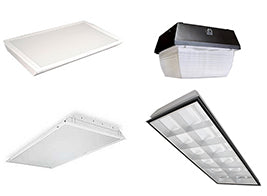
Replacing T12 lamps with T8 or T5 lamps. Which one should I use? A user’s guide to upgrading fluorescent tubes.
Beginning in 2013, T12 linear fluorescent lamps were no longer produced by U.S. lighting manufacturers due to Department of Energy regulations. These regulations were meant to encourage T12 user...
Read Article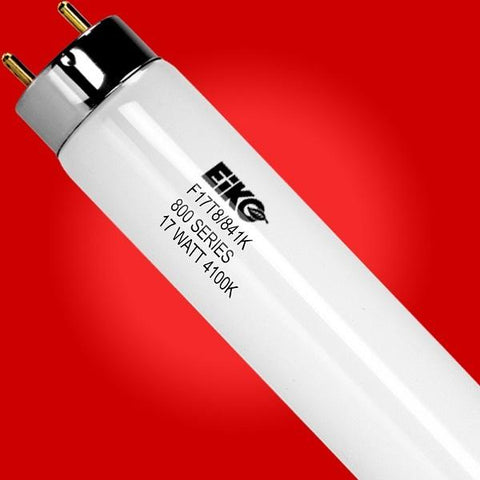
T5HO vs T8 vs T12 Lamp Comparison
Comparison chart showing the difference between T5HO vs T8 vs T12 Lamps. This should give you an idea of what fluorescent lighting fixture and lamps would work for your applications.
Read Article
Fluroescent Bulb Types & Differences
T5 tubes are the latest series of fluorescent lamps. They are offered in standard or high-output (HO) options. There are many differences between T5 lamps and T8 or T12 lamps.
Read Article

