 High Bay LED Lighting
 Industrial Low Bay Lighting
 Industrial Strip Lights
 Vapor Tight Lighting
 LED Shop Lights
 LED Ready Fixtures
 Hazardous Area / Explosion Proof Lighting
 Loading Dock Lights
 Construction / Portable Lighting
 High Temperature LED Lights
 Industrial Ceiling Fans
 LED Work Lights
 Networked Controlled Lighting
 American Made Industrial Lighting
 Clearance
 Troffer Lights
 LED Flat Panel Lights
 Drop Ceiling Lights
 LED Ready Troffers
 Suspended LED Lights
 LED Cylinder Lights
 Stairway & Corridor Lighting
 Hospital Bed Lights
 Wrap Lighting Fixtures
 Gooseneck and Barn Lights
 Commercial Sign Lights
 LED Track Lighting Fixtures & Systems
 Recessed Lighting
 Wafer Lighting
 RGB LED Lights
 Exit / Emergency
 Refrigeration Lighting
 Grow Lights
 UV Disinfecting Lights & Air Purifier Fixtures
 American Made Commercial Lighting
 LED Flood Lights
 Outdoor Wall Lights
 LED Area Lights
 Parking Lot Lights & Poles
 Outdoor Post Top Lights
 LED Stadium Lighting
 Canopy Lights
 Security & Motion Sensor Lights
 LED Bollard Lights
 Outdoor Barn Lights
 Solar Powered LED Lighting
 Dusk to Dawn Lights
 Landscape Lighting
 Outdoor String Lights
 Coastal Wildlife Lighting
 Outdoor House Lights
 American Made Outdoor Lighting
 Architectural Linear Lights
 Architectural Grid Mount Lights
 Architectural Round Pendant Lights
 Architectural Square Linear Lights
 Architectural X-Shaped Linear Lights
 Architectural LED Wall Packs
 Ceiling Fans
 Ceiling Lights
 Chandelier Lights
 Pendant Lighting
 Island Lights
 Under Cabinet Lighting
 Vanity Lights
 Wall Sconces
 LED Tape Lights
 LED Mirrors
 LED Light Bulbs
 LED Tube Lights
 LED Corn Lights
 Vintage LED Bulbs
 Decorative LED Bulbs
 Fluorescent Light Bulbs
 Metal Halide Lamps
 LED Magnetic Strip Retrofit Kits
 LED Strip Light Retrofit Kits
 High Bay LED Retrofit Kits
 LED Troffer Retrofit Kits
 LED Wall Pack Retrofit
 LED Street Light Retrofit Kits
 Recessed Lighting LED Retrofit Kits
 WareSense Blue - Bluetooth Control System
 Ballasts & Drivers
 Emergency Ballast For LED & Fluorescent Lights
 Electrical Supplies & Mounting Kits
 Electrical Tools
 Switches & Receptacles
 Electrical Power Cords
 Sensors and Timers
 Smart Home Automation
 High Bay Occupancy Sensors
 Electric Vehicle Chargers
 Hand Dryers
 LED Shop Lights
 Garage LED Lighting
 Gym Lighting
 Factory Lights
 Restaurant Lights
 Office Lights
 Classroom Lights
 Church Lights
 Warehouse Lights
 Hospital Lights
 Walkway Lights
 Parking Lot Lights
 Exterior Building Lights
 Sports Lighting
 Airport Lights
 NSF Rated Lights
 TAA LED Lighting
 Corridor Lights
 Barn Lighting
 Multi-Family Lighting Solutions




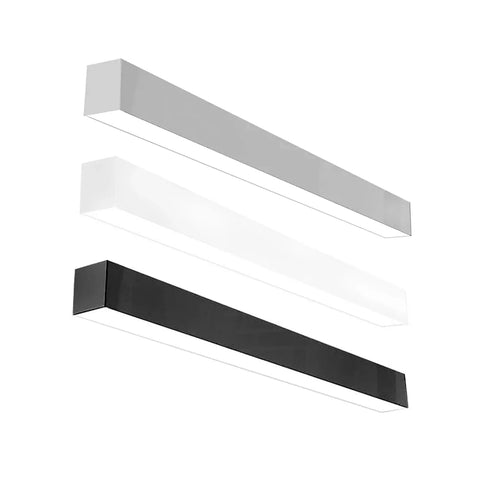
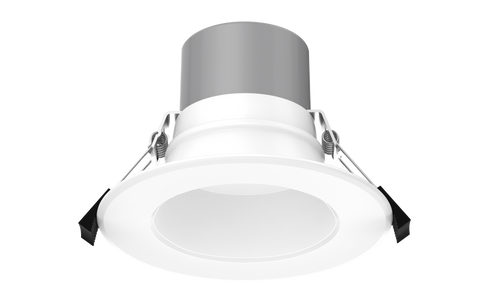

Selecting the right lighting for a dance studio requires a balance between functional visibility, energy efficiency, and atmospheric warmth. Dancers need to see their own line clearly in the mirror while instructors need to read form across the floor — and the same room often has to feel completely different for a 6pm hip-hop class and an evening ballet rehearsal. Here is how to approach fixtures, color temperature and controls for a studio space.
1. The Foundation: Why LED is the Industry Standard
While older studios often relied on fluorescent or halogen bulbs, LED technology is now the premier choice for dance environments. Transitioning to LED offers several distinct advantages:
- Thermal Comfort: Unlike halogens, LEDs emit virtually no heat. This is crucial in a studio where dancers are physically active and need the room to remain cool.
- Cost Efficiency: LEDs provide the highest lumen output for the lowest wattage, significantly reducing monthly utility bills.
- Longevity: Their long lifespan means fewer interruptions for maintenance or bulb replacements in hard-to-reach ceilings.
- Color Accuracy: Look for a high Color Rendering Index (CRI) so costume colors and skin tones read correctly — which matters as soon as anyone photographs or films a class.
2. Color Temperature: Get This Right First
Color temperature does more to define how a dance studio feels and functions than any other single spec, and it is not the same answer for every style.
- General dance and fitness-style classes: 4000K to 5000K. Crisp, neutral-to-cool light reads movement clearly. Dancers can see their line sharply in the mirror and instructors can spot technique across the room. This is the working range for hip-hop, jazz, contemporary and competition training.
- Ballet: slightly warmer. Classical training rooms usually sit a step below that, which suits the traditional aesthetic without giving up the clarity needed to see line and placement.
- Lobby and waiting areas: warmer again. This is where parents wait and retail sits, and it should feel welcoming rather than clinical.
Whatever you choose, keep it consistent within each room. Mixing color temperatures in one studio is immediately visible in the mirrors and is the most common thing that makes an otherwise well-specified room look unplanned.
3. Selectable and Tunable: Why It Matters Here More Than Most
Very few commercial spaces need more than one color temperature. A dance studio genuinely does — which is why the control layer is worth specifying deliberately rather than defaulting to fixed fixtures.
- Fixed CCT. One temperature, chosen at purchase. Fine for a single-use room, restrictive for anything else.
- Selectable CCT. A switch on the fixture sets the temperature at install. This is the practical choice for a multi-room studio: one part number covers the ballet room, the hip-hop room and the lobby, each set differently. Less on the truck and less to reorder later. Just note it is an install-time decision, not something an instructor changes between classes. Many of our selectable linear high bays and panels work this way.
- Tunable and RGBW. Changed live from a controller or app. This is what a studio running several class types in one room actually wants — 5000K for a technique class, warm for a restorative or rehearsal session, and full color for recitals and showcases. Our RGB and CCT tunable fixtures cover linear, panel and downlight formats, and the RGBW linear range includes an acoustic version — worth knowing in a room with mirrors and a hard floor, where echo is already a problem.
One caveat before ordering: tunable and RGBW fixtures need a compatible controller or app, and Bluetooth control has range and pairing limits across a building with several rooms. Confirm the control method suits the layout rather than assuming it will reach.
Pair whichever you choose with dimming controls. Dimming changes intensity but not warmth — a dimmed 5000K fixture is still cold light, just less of it. You need both levers to genuinely change the character of a room.
4. Structural Considerations: Ceiling Height and Mounting
The architecture of your studio dictates the physical "housing" of your lights.
- High Bay vs. Low Bay: For ceilings above roughly 20 feet, high bay fixtures are needed to get light down to the floor. Below that, low bay fixtures give better dispersion without being overpowering. Note that fixture naming is inconsistent across the industry — work from the lumen output and rated mounting height on the spec sheet rather than the product name.
- Recessed Lighting: This is generally the best bet for studios. Because recessed fixtures are tucked into the ceiling, they provide a clean aesthetic and maximize headroom for lifts and jumps. They are also easier to keep clean, as they do not accumulate dust on top of the fixture.
- Surface and Suspended Mounts: If your ceiling cannot accommodate recessed holes, surface mounts provide a similar low-profile look. Suspended fixtures should be reserved for very high ceilings to avoid becoming a safety hazard for active dancers.
5. Mirrors, Glare and Layered Lighting
A single overhead light source creates glare and flat shadows. In a room with mirrors on two or three walls, that problem doubles — every fixture appears twice from a dancer's point of view, once directly and once in reflection.
The fix is aiming and diffusion rather than reducing output. Position fixtures so none sits in the reflected sightline of someone facing the mirror, and favor diffused sources over bare or narrow-beam ones. Then layer:
- Track Lighting: Highly favored for its versatility. Track fixtures let you aim beams precisely — directing light just above the mirrors rather than into them illuminates the dancers while avoiding blinding reflections. This is the single most useful technique in a mirrored room.
- Sconces: Wall-mounted sconces provide a wash of light, often directed upward. Use them as a secondary source to add soft, ambient illumination that reduces the interrogation-room feel of overhead-only lighting.
- Even coverage over brightness. A dancer checking form needs consistent light with no hot spots or hard shadows across the floor. More fixtures at lower output beats fewer bright ones.
6. Zoning and Natural Light
Not every corner of a studio serves the same purpose, so your lighting should vary by zone:
- The Lobby: This area should be bright and crisp to facilitate paperwork, retail sales, and first impressions.
- The Studio: Lighting here should be dimmable and, ideally, tunable to allow for different moods — from high-energy hip-hop to focused ballet.
- Natural Light: Large windows are a massive asset but can be distracting. If your studio faces a busy street, consider placing windows higher up the wall or using frosted glass to let in sunlight while maintaining privacy and focus.
Planning a Dance Studio Lighting Layout?
Our lighting specialists can help you pick fixtures for your ceiling height, work out where they need to sit relative to the mirrors, confirm dimmer and controller compatibility, and run a free photometric layout before you order.
SHOP STUDIO LIGHTING
Karate Dojo Lighting
When it comes to karate dojo lighting, there are a few ways to save money while providing students with illumination. Find out more!
Read Article

