 High Bay LED Lighting
 Industrial Low Bay Lighting
 Industrial Strip Lights
 Vapor Tight Lighting
 LED Shop Lights
 LED Ready Fixtures
 Hazardous Area / Explosion Proof Lighting
 Loading Dock Lights
 Construction / Portable Lighting
 High Temperature LED Lights
 Industrial Ceiling Fans
 LED Work Lights
 Networked Controlled Lighting
 American Made Industrial Lighting
 Clearance
 Troffer Lights
 LED Flat Panel Lights
 Drop Ceiling Lights
 LED Ready Troffers
 Suspended LED Lights
 LED Cylinder Lights
 Stairway & Corridor Lighting
 Hospital Bed Lights
 Wrap Lighting Fixtures
 Gooseneck and Barn Lights
 Commercial Sign Lights
 LED Track Lighting Fixtures & Systems
 Recessed Lighting
 Wafer Lighting
 RGB LED Lights
 Exit / Emergency
 Refrigeration Lighting
 Grow Lights
 UV Disinfecting Lights & Air Purifier Fixtures
 American Made Commercial Lighting
 LED Flood Lights
 Outdoor Wall Lights
 LED Area Lights
 Parking Lot Lights & Poles
 Outdoor Post Top Lights
 LED Stadium Lighting
 Canopy Lights
 Security & Motion Sensor Lights
 LED Bollard Lights
 Outdoor Barn Lights
 Solar Powered LED Lighting
 Dusk to Dawn Lights
 Landscape Lighting
 Outdoor String Lights
 Coastal Wildlife Lighting
 Outdoor House Lights
 American Made Outdoor Lighting
 Architectural Linear Lights
 Architectural Grid Mount Lights
 Architectural Round Pendant Lights
 Architectural Curved LED Linear Lights
 Architectural Square Linear Lights
 Architectural X-Shaped Linear Lights
 Architectural LED Wall Packs
 Ceiling Fans
 Ceiling Lights
 Chandelier Lights
 Pendant Lighting
 Island Lights
 Under Cabinet Lighting
 Vanity Lights
 Wall Sconces
 LED Tape Lights
 LED Mirrors
 LED Light Bulbs
 LED Tube Lights
 LED Corn Lights
 Vintage LED Bulbs
 Decorative LED Bulbs
 Fluorescent Light Bulbs
 Metal Halide Lamps
 LED Magnetic Strip Retrofit Kits
 LED Strip Light Retrofit Kits
 High Bay LED Retrofit Kits
 LED Troffer Retrofit Kits
 LED Wall Pack Retrofit
 LED Street Light Retrofit Kits
 Recessed Lighting LED Retrofit Kits
 WareSense Blue - Bluetooth Control System
 Ballasts & Drivers
 Emergency Ballast For LED & Fluorescent Lights
 Electrical Supplies & Mounting Kits
 Electrical Tools
 Switches & Receptacles
 Electrical Power Cords
 Sensors and Timers
 Smart Home Automation
 High Bay Occupancy Sensors
 Electric Vehicle Chargers
 Hand Dryers
 LED Shop Lights
 Garage LED Lighting
 Gym Lighting
 Factory Lights
 Restaurant Lights
 Office Lights
 Classroom Lights
 Church Lights
 Warehouse Lights
 Hospital Lights
 Walkway Lights
 Parking Lot Lights
 Exterior Building Lights
 Sports Lighting
 Airport Lights
 NSF Rated Lights
 TAA LED Lighting
 Corridor Lights
 Barn Lighting
 Multi-Family Lighting Solutions




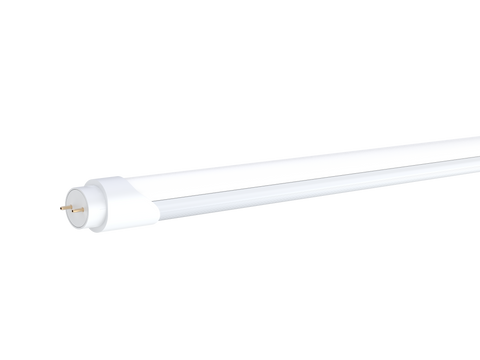


Flickering is the most common lighting complaint there is, and the cause is almost always one of a small number of things. Most are cheap to fix. A few are a safety problem rather than an annoyance, particularly in a workplace with rotating machinery.
This guide covers the causes in the order worth checking them, what each one costs to put right, and when flicker means a fixture has reached the end of its life rather than needing a repair.
Start Here: Is It One Fixture or Several?
Before anything else, establish the scope. It narrows the cause faster than any other single question.
- One lamp flickering — almost always the lamp itself or its socket. Cheapest case.
- One fixture flickering — usually the ballast or driver inside that fixture.
- Several fixtures on the same switch — usually the dimmer or the switch.
- Several fixtures across different circuits — an electrical supply problem. Stop and get an electrician.
Fluorescent Flicker
Fluorescent lamps flicker for three reasons, and they are easy to tell apart.
The lamp is near end of life. Fluorescent tubes commonly begin to flicker somewhere around 75% of their rated life, often with darkened bands at one or both ends of the tube. This is the normal failure mode and a lamp swap fixes it.
The lamp is loose in the socket. Tubes work loose with vibration, which is common in warehouses, workshops and anywhere with overhead traffic or machinery. Switch the fixture off, let the lamp cool, and reseat it.
The ballast is failing. If a new lamp flickers in the same fixture, the ballast is the cause. A failing ballast may also hum, buzz, or show a visible burn mark or leaking potting compound. Replace the ballast, or take the opportunity to remove it entirely.
That last point is worth a moment. If you are replacing a ballast on a fluorescent fixture, you are spending money to keep a technology running that costs roughly three times as much to operate as the LED equivalent. A T8 retrofit kit or a set of ballast-bypass LED tubes removes the ballast from the equation permanently, and removes this failure mode with it.
LED Flicker
LEDs do not flicker the way fluorescent lamps do. When they flicker, the cause is nearly always the driver or the control feeding them.
Dimmer incompatibility. This is the most common LED flicker complaint by a distance. An older dimmer designed for incandescent load expects a resistive load it is not getting from an LED driver, and the result is flicker, buzzing, or a lamp that will not dim smoothly through its range. The fix is a dimmer rated for LED, matched to the dimming protocol the fixture uses.
Minimum load not met. Dimmers have a minimum wattage. Replace six 60W incandescent lamps with six 9W LEDs and the total load may fall below what the dimmer needs to operate, which shows up as flicker at low settings. Either add load or fit a dimmer with a lower minimum.
Protocol mismatch. Commercial LED fixtures commonly use 0-10V dimming, which needs a 0-10V control rather than a standard wall dimmer. A TRIAC dimmer on a 0-10V driver will not work properly no matter how good the dimmer is. Check the fixture spec sheet for the dimming method before buying the control.
Failing driver. An LED fixture that flickers with no dimmer in the circuit usually has a failing driver. On fixtures with a serviceable driver this is a replacement part; on sealed integrated fixtures it means replacing the fixture.
Electrical Causes
These affect any lamp type and are worth ruling out when the flicker is not confined to one fixture.
Loose connections. At the socket, the fixture terminals, the switch, or the breaker. Loose connections arc, and arcing is a fire risk — this is the one cause on the list that should not wait. If the flicker is accompanied by warmth at a switch plate, a burning smell, or discoloration, stop using the circuit and call an electrician.
Voltage fluctuation. If lights dim or flicker when a large motor load starts — a compressor, a lift, an HVAC unit, a piece of production equipment — the circuit is seeing voltage sag. Occasional slight dimming on startup is normal. Repeated or severe flicker means the circuit is undersized or the service needs attention.
Shared circuit overload. Lighting sharing a circuit with heavy equipment will flicker as that equipment cycles. In a commercial building, lighting on its own circuit is worth the cost of getting it there.
When Flicker Is a Safety Problem
Two situations where flicker stops being an annoyance.
Stroboscopic effect around rotating machinery. Light flickering at a frequency close to the rotation speed of a shaft, blade, spindle or fan can make it appear stationary or turning slowly when it is running at full speed. In a machine shop, fabrication area or production line this is a genuine hazard, and it is the reason low-flicker lighting is specified for those environments rather than simply preferred. If you have visible flicker near rotating equipment, treat it as urgent.
Health effects. Flicker that is too fast to see consciously can still cause headaches, eye strain and reduced concentration over a shift, and it is a recognised trigger for people with photosensitive conditions and migraine. In offices, classrooms and healthcare settings this is worth specifying against rather than reacting to. Quality LED fixtures with well-designed drivers produce very low flicker; the cheapest ones often do not.
Repair or Replace?
A rough rule. Replacing a lamp is always worth doing. Replacing a ballast on a fluorescent fixture rarely is, because you are paying labor to keep an inefficient fixture alive and the next component will fail behind it. Replacing an LED driver is worth it on a serviceable commercial fixture and impossible on a sealed one.
Where a facility has several flickering fluorescent fixtures at once, that is a fleet reaching end of life together, and it is the natural moment to convert rather than repair. Options run from LED tubes at the cheapest end, through strip retrofit kits and troffer retrofit kits, to full fixture replacement.
Not sure which applies? Our team offers free lighting layout and design assistance, and can help work out whether a repair or a retrofit makes more sense for your site.
Frequently Asked Questions
Why do my LED lights flicker when dimmed?
Almost always dimmer incompatibility. An older dimmer built for incandescent load does not drive an LED driver correctly, and the total LED load may also fall below the dimmer's minimum wattage. Fit a dimmer rated for LED, and check whether the fixture uses TRIAC or 0-10V dimming before buying — the two are not interchangeable.
Is a flickering light bulb dangerous?
Usually not, but sometimes yes. A single flickering lamp near end of life is harmless. Flicker caused by a loose connection is a fire risk, because loose connections arc — if there is warmth at a switch plate, a burning smell or discoloration, stop using the circuit and call an electrician. Flicker near rotating machinery is a separate hazard because of the stroboscopic effect.
Why does my fluorescent light flicker when I turn it on?
Some flicker at startup is normal for fluorescent, particularly in cold conditions, because the lamp needs to strike an arc. Persistent flicker after warm-up means the lamp is near end of life or the ballast is failing. If a new lamp flickers in the same fixture, it is the ballast.
Can flickering lights cause headaches?
Yes. Flicker too rapid to see consciously can still cause headaches, eye strain and reduced concentration over a working day, and it is a recognised migraine trigger for some people. This is why low-flicker drivers matter in offices, classrooms and healthcare environments rather than being an optional upgrade.
Should I replace the ballast or convert to LED?
If one ballast has failed in an otherwise healthy installation, replacing it is reasonable. If several fixtures are flickering at once, the installation is reaching end of life together and converting is usually the better spend — a ballast replacement costs labor to keep a fixture running that uses roughly three times the energy of the LED equivalent, and the remaining components will fail behind it.
Consider Watching These Videos as Well...
LED Tube Lights
Watch our LED Tube Lights Product Review video. Our videos will educate you so that you can confidently purchase and install LED light fixtures, whether they are for a new installation or the retro...
Watch Video

