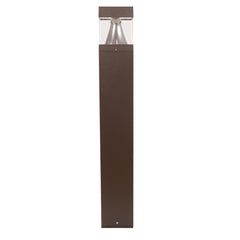
Commercial LED Bollard Light: Frequently Asked Questions
What does IP65 mean, and why does it matter for a bollard light?
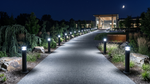
IP65 is an ingress protection rating that tells you how well a fixture is sealed against the elements. The first digit (6) means the fixture is fully dust-tight. The second digit (5) means it can withstand water jets from any direction without being damaged. For a bollard installed at grade level on a walkway or campus, that matters. These fixtures get hit with irrigation systems, pressure washing, driving rain, and snowmelt runoff, all conditions that would quickly degrade a fixture with a lower IP rating. IP65 is the standard minimum for commercial outdoor lighting, and it's one of the reasons this WareLight bollard is rated for operating temperatures as low as -40°F. If a bollard is not rated at least IP65, it's not suited for outdoor commercial use, regardless of what else the spec sheet says.
What is the difference between a flat-top and a dome-top bollard light?
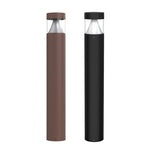
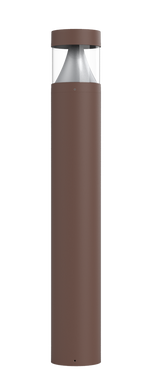
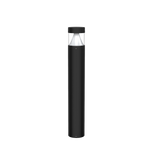
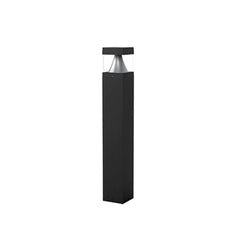
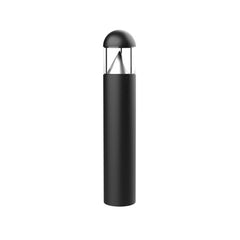
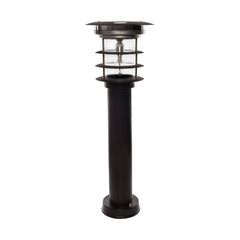
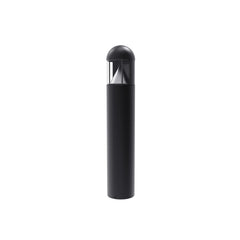
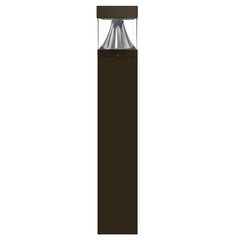
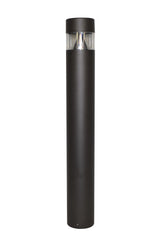
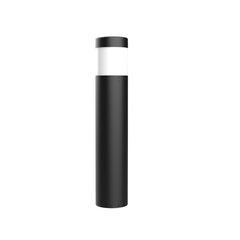
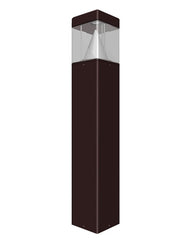
The top cap is primarily an aesthetic decision, though there is a functional consideration worth knowing. A flat-top bollard has a clean horizontal plane that reads as sharp and contemporary, a popular choice for modern commercial properties, campuses, and institutional settings. A dome top has a curved profile that naturally sheds rain and debris without allowing anything to pool on the surface. In most climates, either performs equally well. If you're installing in a region with heavy snow or ice accumulation, some specifiers prefer a dome top because there's no flat surface for ice to sit and expand against the cap seam over time. Warehouse Lighting carries both flat-top and dome-top versions of this WareLight modular bollard in the same wattage and CCT configuration, so you can match the architectural requirement without changing your core spec.
What is the difference between a cone reflector and a louver reflector on a bollard?
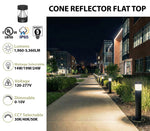
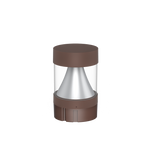
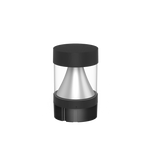
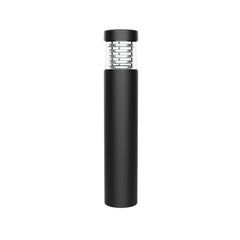
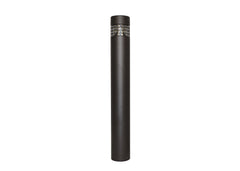
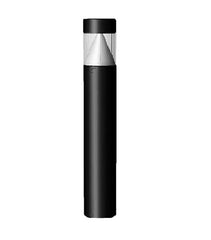
Both control where the light goes, but they do it differently. A cone reflector produces a wider, more uniform spread around the bollard, which is ideal for general walkway illumination where consistent coverage and smooth gradients between fixtures are the priority. A louver reflector uses horizontal slats to cut light at specific vertical angles, reducing upward light spill and giving you tighter control over glare when pedestrians or building occupants are in close proximity to the fixture. Louver versions are often specified on projects with strict light trespass requirements or dark sky ordinance compliance. If your project has no specific cutoff requirements and you need maximum uniformity across the path surface, the cone reflector is the more practical choice for most commercial applications.
What should I consider when budgeting for commercial LED bollard lights?
Understanding LED bollard light price starts with knowing what you're comparing. Commercial LED bollard pricing reflects numerous factors: lumen output, ingress protection rating, certifications like cULus, housing and finish quality, and whether the fixture supports new construction or retrofit installation. At the commercial grade, you are also paying for longer service life and a meaningful warranty. The WareLight bollard carries a 5-year warranty and a 50,000-hour rated life, which reduces ongoing replacement and maintenance costs compared to lower-spec alternatives.
When building out a bollard lights price list for a project, most contractors account for fixture cost alongside labor, base hardware, and electrical rough-in. The bollard light price per unit can also shift significantly based on quantity: Volume discounts are available for multi-unit orders on this product, which makes a real difference on walkway, parking, or campus installations. For larger quantities, the "Large Quote Request" option on the product page is the most direct path to project pricing.
How far apart should commercial LED bollard lights be spaced on a walkway?
Spacing depends on the LED bollard light's lumen output, its mounting height, and the foot-candle target for the application. A general commercial walkway typically targets an average of 0.5 to 1 foot-candle, while higher-traffic areas, security paths, and building entries often require more, based on IES guidelines and local code requirements. At the 24W setting (3,360 lumens), this fixture will cover more ground per unit than at the 14W or 19W settings, so your wattage selection directly affects how many fixtures a project requires. Pro Tip: At Warehouse Lighting, we offer free lighting layout assistance for your project.
 High Bay LED Lighting
 Industrial Low Bay Lighting
 Industrial Strip Lights
 Vapor Tight Lighting
 LED Shop Lights
 LED Ready Fixtures
 Hazardous Area / Explosion Proof Lighting
 Loading Dock Lights
 Construction / Portable Lighting
 High Temperature LED Lights
 Industrial Ceiling Fans
 LED Work Lights
 Networked Controlled Lighting
 American Made Industrial Lighting
 Clearance
 Troffer Lights
 LED Flat Panel Lights
 Drop Ceiling Lights
 LED Ready Troffers
 Suspended LED Lights
 LED Cylinder Lights
 Stairway & Corridor Lighting
 Hospital Bed Lights
 Wrap Lighting Fixtures
 Gooseneck and Barn Lights
 Commercial Sign Lights
 LED Track Lighting Fixtures & Systems
 Recessed Lighting
 Wafer Lighting
 RGB LED Lights
 Exit / Emergency
 Refrigeration Lighting
 Grow Lights
 UV Disinfecting Lights & Air Purifier Fixtures
 American Made Commercial Lighting
 LED Flood Lights
 Outdoor Wall Lights
 LED Area Lights
 Parking Lot Lights & Poles
 Outdoor Post Top Lights
 LED Stadium Lighting
 Canopy Lights
 Security & Motion Sensor Lights
 LED Bollard Lights
 Outdoor Barn Lights
 Solar Powered LED Lighting
 Dusk to Dawn Lights
 Landscape Lighting
 Outdoor String Lights
 Coastal Wildlife Lighting
 Outdoor House Lights
 American Made Outdoor Lighting
 Architectural Linear Lights
 Architectural Grid Mount Lights
 Architectural Round Pendant Lights
 Architectural Square Linear Lights
 Architectural X-Shaped Linear Lights
 Architectural LED Wall Packs
 Ceiling Fans
 Ceiling Lights
 Chandelier Lights
 Pendant Lighting
 Island Lights
 Under Cabinet Lighting
 Vanity Lights
 Wall Sconces
 LED Tape Lights
 LED Mirrors
 LED Light Bulbs
 LED Tube Lights
 LED Corn Lights
 Vintage LED Bulbs
 Decorative LED Bulbs
 Fluorescent Light Bulbs
 Metal Halide Lamps
 LED Magnetic Strip Retrofit Kits
 LED Strip Light Retrofit Kits
 High Bay LED Retrofit Kits
 LED Troffer Retrofit Kits
 LED Wall Pack Retrofit
 LED Street Light Retrofit Kits
 Recessed Lighting LED Retrofit Kits
 WareSense Blue - Bluetooth Control System
 Ballasts & Drivers
 Emergency Ballast For LED & Fluorescent Lights
 Electrical Supplies & Mounting Kits
 Electrical Tools
 Switches & Receptacles
 Electrical Power Cords
 Sensors and Timers
 Smart Home Automation
 High Bay Occupancy Sensors
 Electric Vehicle Chargers
 Hand Dryers
 LED Shop Lights
 Garage LED Lighting
 Gym Lighting
 Factory Lights
 Restaurant Lights
 Office Lights
 Classroom Lights
 Church Lights
 Warehouse Lights
 Hospital Lights
 Walkway Lights
 Parking Lot Lights
 Exterior Building Lights
 Sports Lighting
 Airport Lights
 NSF Rated Lights
 TAA LED Lighting
 Corridor Lights
 Barn Lighting
 Multi-Family Lighting Solutions