 High Bay LED Lighting
 Industrial Low Bay Lighting
 Industrial Strip Lights
 Vapor Tight Lighting
 LED Shop Lights
 LED Ready Fixtures
 Hazardous Area / Explosion Proof Lighting
 Loading Dock Lights
 Construction / Portable Lighting
 High Temperature LED Lights
 Industrial Ceiling Fans
 LED Work Lights
 Networked Controlled Lighting
 American Made Industrial Lighting
 Clearance
 Troffer Lights
 LED Flat Panel Lights
 Drop Ceiling Lights
 LED Ready Troffers
 Suspended LED Lights
 LED Cylinder Lights
 Stairway & Corridor Lighting
 Hospital Bed Lights
 Wrap Lighting Fixtures
 Gooseneck and Barn Lights
 Commercial Sign Lights
 LED Track Lighting Fixtures & Systems
 Recessed Lighting
 Wafer Lighting
 RGB LED Lights
 Exit / Emergency
 Refrigeration Lighting
 Grow Lights
 UV Disinfecting Lights & Air Purifier Fixtures
 American Made Commercial Lighting
 LED Flood Lights
 Outdoor Wall Lights
 LED Area Lights
 Parking Lot Lights & Poles
 Outdoor Post Top Lights
 LED Stadium Lighting
 Canopy Lights
 Security & Motion Sensor Lights
 LED Bollard Lights
 Outdoor Barn Lights
 Solar Powered LED Lighting
 Dusk to Dawn Lights
 Landscape Lighting
 Outdoor String Lights
 Coastal Wildlife Lighting
 Outdoor House Lights
 American Made Outdoor Lighting
 Architectural Linear Lights
 Architectural Grid Mount Lights
 Architectural Round Pendant Lights
 Architectural Curved LED Linear Lights
 Architectural Square Linear Lights
 Architectural X-Shaped Linear Lights
 Architectural LED Wall Packs
 Ceiling Fans
 Ceiling Lights
 Chandelier Lights
 Pendant Lighting
 Island Lights
 Under Cabinet Lighting
 Vanity Lights
 Wall Sconces
 LED Tape Lights
 LED Mirrors
 LED Light Bulbs
 LED Tube Lights
 LED Corn Lights
 Vintage LED Bulbs
 Decorative LED Bulbs
 Fluorescent Light Bulbs
 Metal Halide Lamps
 LED Magnetic Strip Retrofit Kits
 LED Strip Light Retrofit Kits
 High Bay LED Retrofit Kits
 LED Troffer Retrofit Kits
 LED Wall Pack Retrofit
 LED Street Light Retrofit Kits
 Recessed Lighting LED Retrofit Kits
 WareSense Blue - Bluetooth Control System
 Ballasts & Drivers
 Emergency Ballast For LED & Fluorescent Lights
 Electrical Supplies & Mounting Kits
 Electrical Tools
 Switches & Receptacles
 Electrical Power Cords
 Sensors and Timers
 Smart Home Automation
 High Bay Occupancy Sensors
 Electric Vehicle Chargers
 Hand Dryers
 LED Shop Lights
 Garage LED Lighting
 Gym Lighting
 Factory Lights
 Restaurant Lights
 Office Lights
 Classroom Lights
 Church Lights
 Warehouse Lights
 Hospital Lights
 Walkway Lights
 Parking Lot Lights
 Exterior Building Lights
 Sports Lighting
 Airport Lights
 NSF Rated Lights
 TAA LED Lighting
 Corridor Lights
 Barn Lighting
 Multi-Family Lighting Solutions



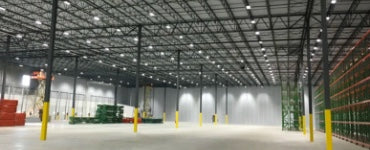
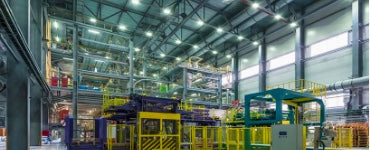
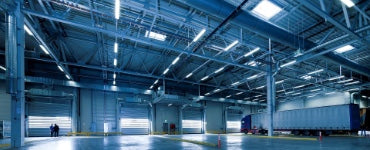

Lighting by Warehouse Zone
Specifying one fixture and one light level across an entire building is the most common and most expensive mistake in warehouse lighting. Each of these zones has a different requirement, and getting them right individually costs less than over-lighting the whole floor to satisfy the most demanding one.

Racking and Storage Aisles
Aisles are the zone people get wrong most often, because the light needs to reach the face of the racking rather than the floor between it. A fixture with a wide, symmetrical beam spills most of its output onto the aisle floor and leaves the upper shelves in shadow, which is where the pick errors happen.
Use linear high bay fixtures aligned along the aisle rather than across it, and look for a narrow or aisle-specific beam distribution on the spec sheet. Where racking runs high, vertical illuminance on the shelf face matters more than the horizontal reading on the floor — worth stating explicitly if you are asking for a photometric layout.

Open Floor and Staging
Open areas are the straightforward case: even coverage, no dark gaps, and enough uniformity that forklift drivers are not moving between bright and dim patches. UFO high bay fixtures suit this well because their round, symmetrical distribution covers open floor efficiently. This is also where the ceiling height table below does most of its work.

Pick and Pack Stations
Task areas need more light than the surrounding floor and better color rendering. Staff are reading labels, checking part numbers and inspecting goods, so specify high CRI here even if the general floor does not need it. Industrial strip lighting mounted over benches is the usual answer, and it also fills the shadow a worker's own body casts onto the surface they are working on.

Loading Docks and Dock Doors
Docks are a transition zone and behave like one. During the day a driver moves from bright daylight into a comparatively dim interior; at night the reverse. Either way the eye has to adapt, and the dock is where a lot of warehouse accidents happen.
Light the dock area more brightly than the adjacent floor, and add dock lights at the doors themselves so the inside of a trailer is lit for loading. A trailer interior is effectively a dark box that overhead fixtures cannot reach.

Cold Storage and Freezers
Refrigerated and freezer areas need fixtures rated for the actual operating temperature, not just sealed against moisture. LED performs well in cold — better than fluorescent, which struggles to start at low temperatures — but check the rated ambient range on the spec sheet, because a fixture rated to 0°C is not suitable for a blast freezer.
Condensation on the lens when doors open is the other consideration, which is where a sealed vapor tight fixture earns its place.

Mezzanines and Low-Ceiling Areas
Mezzanine floors and areas under them have far lower clearance than the main floor, so the fixture that works overhead will be too bright and too close. This is where lower-output fixtures from our low bay range fit — and see the note below about naming, because several products in that range are labelled as high bays.

Egress Routes and Emergency Lighting
Warehouses are large buildings with long travel distances to an exit, which makes marked egress routes a code requirement rather than a nicety. Exit signs and emergency units carry integral battery backup so they stay lit through a power loss. Confirm requirements with your local authority having jurisdiction, since they vary by adopted code edition.

Controls Across Zones
Warehouse occupancy is uneven by nature — aisles that see traffic twice a shift sit empty the rest of the time. Occupancy sensors and timers are where most of the operational saving comes from on a large floor, and LED responds to switching far better than HID, which cannot be cycled frequently without shortening lamp life.
Lumen Output and Spacing by Ceiling Height
Ceiling height determines both how much output a fixture needs and how far apart fixtures can sit. Light falls off with the square of the distance, so a fixture at 40 feet delivers far less to the floor than the same fixture at 20 — but it also spreads over a wider area, which is why spacing widens as height increases.
These are the ranges we work from when specifying:
| Ceiling Height | Lumen Output | Recommended Spacing |
|---|---|---|
| 10 feet | 12,000-21,000 lumens | 10-15 feet apart |
| 20 feet | 22,000-35,000 lumens | 15-20 feet apart |
| 30 feet | 35,000-40,000 lumens | 20-30 feet apart |
| 40 feet | 40,000+ lumens | 30-40 feet apart |
Treat these as a first pass. Racking height, aisle width, wall reflectance and available daylight all shift the result, which is why a photometric layout is worth doing on any building of real size — it models the actual space rather than an empty box.
Go by Lumens, Not the Product Name
Fixture naming is not applied consistently across the industry. The same product may be sold as a high bay by one manufacturer and a low bay by another, and UFO-style fixtures are frequently labelled high bay regardless of the height they are rated for. Our own low bay range contains fixtures named as high bays for exactly that reason.
So do not specify from the product name. Work from the lumen output and the rated mounting height on the spec sheet — those are the numbers that decide whether a fixture will light your floor.
Harsh and Wet Areas
Any part of a warehouse exposed to dust, fumes, moisture or wash-down needs a sealed fixture. High bay vapor tight fixtures are sealed to keep those particles away from the light source and wiring, and they are rated by IP number — typically IP65, IP66 or IP67 — for resistance to water and dust ingress. They are available in 2, 4 and 8 foot lengths.
One distinction worth being clear on: vapor tight is not the same as explosion-proof. A sealed fixture protects itself from the environment. Where flammable dust, gases or vapors may be present — grain handling, solvent storage, some woodworking operations — the area is classified and requires explosion-proof fixtures, which are built to contain an ignition inside their own housing. Substituting one for the other is a code violation regardless of how well sealed the fixture is.
Color Temperature for Warehouses
Most warehouse floors sit between 4000K and 5000K. That neutral-to-cool range reads crisp, supports alertness across a shift, and makes labels and shelf markings easier to read. Going much warmer than 4000K in a working area tends to make the space feel dim even when the light levels are correct. Keep it consistent across the floor — mixing color temperatures is immediately visible and makes a well-specified building look unplanned.
Frequently Asked Questions About Warehouse Lighting
For a comparison of the fixture types themselves, see our review of the best warehouse lighting.
How many lumens do I need for a warehouse?
Lumen output scales with ceiling height. As a guide: 12,000 to 21,000 lumens at a 10 foot ceiling, 22,000 to 35,000 at 20 feet, 35,000 to 40,000 at 30 feet, and 40,000 or more at 40 feet and above. Racking height, aisle width, wall reflectance and daylight all shift the result, so treat those as a starting point rather than a specification.
How far apart should warehouse lights be spaced?
Spacing widens as the ceiling gets higher, because the beam has further to spread before it reaches the floor. The ranges we work from are 10 to 15 feet apart at a 10 foot ceiling, 15 to 20 feet at 20 feet, 20 to 30 feet at 30 feet, and 30 to 40 feet at 40 feet. In racking aisles, align fixtures along the aisle rather than across it so the light reaches the shelf faces.
Should racking aisles be lit differently from open floor?
Yes, and this is the most common oversight. Open floor needs even horizontal coverage, but in an aisle the light has to reach the face of the racking, which is a vertical surface. A wide symmetrical beam puts most of its output on the aisle floor and leaves upper shelves in shadow. Use fixtures with a narrower or aisle-specific distribution, aligned along the aisle, and ask for vertical illuminance on the shelf face if you are commissioning a photometric layout.
What color temperature is best for a warehouse?
Between 4000K and 5000K for working areas. That range reads crisp and neutral, supports alertness across a shift, and makes labels and shelf markings easier to read. Warmer than 4000K tends to make a large space feel dim even when the measured light level is correct.
Do I need special fixtures for a freezer or cold storage area?
Check the rated ambient temperature range on the spec sheet rather than assuming a sealed fixture is enough. LED performs better in cold than fluorescent, which struggles to start at low temperatures, but a fixture rated to 0°C is not suitable for a blast freezer. Condensation when doors open is the other factor, which is where a sealed vapor tight fixture helps.
Is vapor tight the same as explosion-proof?
No, and they are not interchangeable. A vapor tight fixture is sealed to keep moisture, dust and vapor out, which protects the fixture. An explosion-proof fixture is built to contain an ignition inside its own housing so it cannot ignite the surrounding atmosphere, which protects the building. Where an area is classified as hazardous, a vapor tight fixture is a code violation no matter how well sealed it is.
Planning a Warehouse Lighting Layout?
Send us your building dimensions, ceiling height and racking layout and our specialists will run a free photometric layout showing fixture count, placement and the light levels you will actually achieve — including vertical illuminance on rack faces if aisles are part of the job. Browse the range or get in touch and we will work from your drawings.
Shop Warehouse LightingArticles Related to Industrial Warehouse Lighting

Compare linear and UFO high bay, low bay and strip fixtures side by side to work out which type suits your building.
OSHA minimums, ANSI/IES targets by task type, and lumen output and spacing by ceiling height.
Task lighting, shadow control and fixture selection for machine shops and tool rooms.

Static LED UFO High Bay, 30,000 Lumens, 200 Watt, 5000K, 120-277V, Black Finish

CondorX Premium 2FT LED Linear High Bay, 24,640 Lumen Max, Wattage and CCT Selectable, 120-277V, Sensor Ready

2FT LED Compact Linear High Bay Fixture, 15,400 Lumen Max, Wattage and CCT Selectable, 120-277V

Aries G6 LED UFO High Bay, 22,500 Lumen Max, Wattage, CCT, and Optic Selectable, Black Finish, Comparable to 320-400 Watt HID Fixture, 120-277V
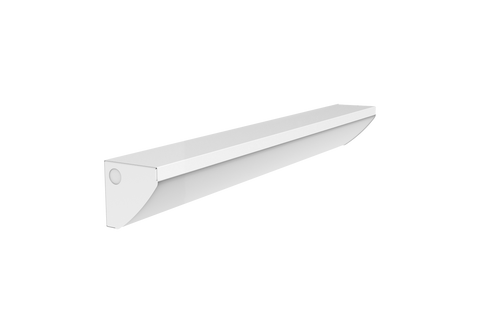
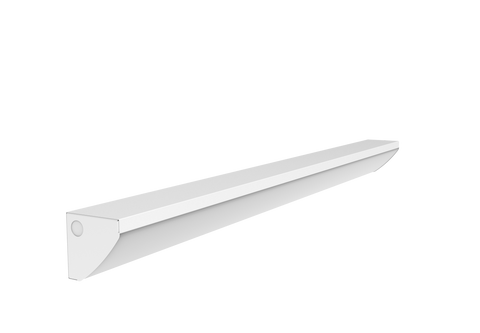

Shop High Bay LED Lights from Warehouse-Lighting.com. Our High Bay LED Lights offer superior illumination and efficiency, perfect for large industrial spaces.
View (275) Products
LED low bay lights for ceilings under 20 feet. Troffer, round UFO and retrofit options with free layout assistance on commercial projects.
View (38) Products
Shop commercial LED strip lights in staggered, continuous, and shop light configurations. Durable fixtures for warehouses, retail, and offices.
View (88) Products
Machine Shop Lighting
There is no denying the importance of lighting when working on a task. Working requires lighting that aids in visibility without harsh shadows to help get the job done right. Whether operating a la...
Read Article
Welding Shop Lighting
When working around potentially dangerous equipment or tools, proper lighting is a matter of safety. With the right lighting in a welding shop, you can ensure accidents and mistakes aren’t a result...
Read Article
Factory Lighting
When it comes to factory lighting, the setting requires certain solutions and considerations. Find out how to properly light this location.
Read Article
WareLight Aries G6 LED UFO High Bay: Product Overview
Specs, options and model selection for the WareLight Aries G6 LED UFO high bay: selectable wattage, CCT and optics, up to 36,000 lumens, DLC Premium.
Watch Video
LED Condor High Bays: WareLight Product Overview
Watch Video

