High Bay LED Lighting
 Industrial Low Bay Lighting
 Industrial Strip Lights
 Vapor Tight Lighting
 LED Shop Lights
 LED Ready Fixtures
 Hazardous Area / Explosion Proof Lighting
 Loading Dock Lights
 Construction / Portable Lighting
 High Temperature LED Lights
 Industrial Ceiling Fans
 LED Work Lights
 Networked Controlled Lighting
 American Made Industrial Lighting
 Clearance
 Troffer Lights
 LED Flat Panel Lights
 Drop Ceiling Lights
 LED Ready Troffers
 Suspended LED Lights
 LED Cylinder Lights
 Stairway & Corridor Lighting
 Exit / Emergency
 Wrap Lighting Fixtures
 Gooseneck and Barn Lights
 Commercial Sign Lights
 LED Track Lighting Fixtures & Systems
 Recessed Lighting
 Wafer Lighting
 RGB LED Lights
 Hospital Bed Lights
 Refrigeration Lighting
 Grow Lights
 UV Disinfecting Lights & Air Purifier Fixtures
 American Made Commercial Lighting
 LED Flood Lights
 Outdoor Wall Lights
 LED Area Lights
 Parking Lot Lights & Poles
 Outdoor Post Top Lights
 LED Stadium Lighting
 Canopy Lights
 Security & Motion Sensor Lights
 LED Bollard Lights
 Outdoor Barn Lights
 Solar Powered LED Lighting
 Dusk to Dawn Lights
 Landscape Lighting
 Outdoor String Lights
 Coastal Wildlife Lighting
 Outdoor House Lights
 American Made Outdoor Lighting
 Architectural Linear Lights
 Architectural Grid Mount Lights
 Architectural Round Pendant Lights
 Architectural Square Linear Lights
 Architectural X-Shaped Linear Lights
 Architectural LED Wall Packs
 Ceiling Fans
 Ceiling Lights
 Chandelier Lights
 Pendant Lighting
 Island Lights
 Under Cabinet Lighting
 Vanity Lights
 Wall Sconces
 LED Tape Lights
 LED Mirrors
 LED Light Bulbs
 LED Tube Lights
 LED Corn Lights
 Vintage LED Bulbs
 Decorative LED Bulbs
 Fluorescent Light Bulbs
 Metal Halide Lamps
 LED Magnetic Strip Retrofit Kits
 LED Strip Light Retrofit Kits
 High Bay LED Retrofit Kits
 LED Troffer Retrofit Kits
 LED Wall Pack Retrofit
 LED Street Light Retrofit Kits
 Recessed Lighting LED Retrofit Kits
 WareSense Blue - Bluetooth Control System
 Ballasts & Drivers
 Emergency Ballast For LED & Fluorescent Lights
 Electrical Supplies & Mounting Kits
 Electrical Tools
 Switches & Receptacles
 Electrical Power Cords
 Sensors and Timers
 Smart Home Automation
 High Bay Occupancy Sensors
 Electric Vehicle Chargers
 Hand Dryers
 LED Shop Lights
 Office Lights
 Classroom Lights
 Church Lights
 Gym Lighting
 Factory Lights
 Hospital Lights
 Walkway Lights
 Parking Lot Lights
 Exterior Building Lights
 Sports Lighting
 Airport Lights
 Garage LED Lighting
 NSF Rated Lights
 TAA LED Lighting
 Restaurant Lights
 Corridor Lights
 Barn Lighting
 Multi-Family Lighting Solutions



- Air Tight (0)
- American Made (0)
- CSA (0)
- CULUS (0)
- Damp Location (0)
- DLC (0)
- DLC Premium (0)
- Energy Star (0)
- ETL listed (0)
- Fire Rated (0)
- IC Rated (0)
- IP54 (0)
- IP65 (0)
- IP66 (0)
- NSF Listed (0)
- ROHS (0)
- Title 24 (0)
- UL Listed (0)
- USA Assembled (0)
- Wet Location (0)
- clearance (0)
- Air TIght (0)
- Damp Locations (0)
- ETL Listed (0)
- TAA Compliant (0)
- WareLight (97)
- Access Lighting (102)
- Aleo (2)
- ASD Lighting (24)
- Atlas (15)
- Eiko (36)
- Envision (96)
- ESL Vision (4)
- Et2 Contemporary Lighting (18)
- ETi Solid State Lighting Inc (2)
- Euri Lighting (8)
- GKOLED (14)
- Green Creative (28)
- Halco (14)
- Industrial Lighting Products (22)
- Keystone Technologies (46)
- LEDSION (2)
- Lotus LED Lights (18)
- Louvers International (2)
- Maxim Lighting (230)
- Maxlite (3)
- Millennium Lighting (91)
- Morris GWG (2)
- naturaLED (12)
- NICOR (9)
- Nora Lighting (4)
- QSSI (4)
- RAB Lighting (9)
- SATCO (48)
- Sea Gull Lighting (90)
- Sylvania Lighting (5)
- TechBrite (2)
- WareLight Select (137)
- Westgate Manufacturing (374)
- WSD (2)
- ELCO (24)
- Luxrite (7)
- 1 x 4 LED Flat Panels (0)
- 2 x 2 LED Flat Panels (0)
- 2 x 4 LED Flat Panels (0)
- 1 x 4 LED Troffers (0)
- 2 x 2 LED Troffers (0)
- 2 x 4 LED Troffers (0)
- Cylinder Wall Lights (0)
- Edge Lit Exit Signs (0)
- Emergency Light & Exit Sign Combo (0)
- Emergency Light & Exit Sign Guards (0)
- LED Cylinder Lights (0)
- LED Exit Sign Retrofit Kits (0)
- Outdoor Wall Sconces (0)
- Recessed Lighting Housings (0)
- Recessed Lights (0)
- Single Double Face Exit Signs (0)
- Suspended Linear and Architectural Lighting (0)
- Track Lighting (0)
- Track Lighting Accessories (0)
- Under Cabinet Lights (0)
- Wafer Lights (0)
- Wall Sconces (0)
- Wet Listed Exit Signs (0)
Translation missing: en.collections.filters.title
- Air Tight (0)
- American Made (0)
- CSA (0)
- CULUS (0)
- Damp Location (0)
- DLC (0)
- DLC Premium (0)
- Energy Star (0)
- ETL listed (0)
- Fire Rated (0)
- IC Rated (0)
- IP54 (0)
- IP65 (0)
- IP66 (0)
- NSF Listed (0)
- ROHS (0)
- Title 24 (0)
- UL Listed (0)
- USA Assembled (0)
- Wet Location (0)
- clearance (0)
- Air TIght (0)
- Damp Locations (0)
- ETL Listed (0)
- TAA Compliant (0)
- WareLight (97)
- Access Lighting (102)
- Aleo (2)
- ASD Lighting (24)
- Atlas (15)
- Eiko (36)
- Envision (96)
- ESL Vision (4)
- Et2 Contemporary Lighting (18)
- ETi Solid State Lighting Inc (2)
- Euri Lighting (8)
- GKOLED (14)
- Green Creative (28)
- Halco (14)
- Industrial Lighting Products (22)
- Keystone Technologies (46)
- LEDSION (2)
- Lotus LED Lights (18)
- Louvers International (2)
- Maxim Lighting (230)
- Maxlite (3)
- Millennium Lighting (91)
- Morris GWG (2)
- naturaLED (12)
- NICOR (9)
- Nora Lighting (4)
- QSSI (4)
- RAB Lighting (9)
- SATCO (48)
- Sea Gull Lighting (90)
- Sylvania Lighting (5)
- TechBrite (2)
- WareLight Select (137)
- Westgate Manufacturing (374)
- WSD (2)
- ELCO (24)
- Luxrite (7)
- 1 x 4 LED Flat Panels (0)
- 2 x 2 LED Flat Panels (0)
- 2 x 4 LED Flat Panels (0)
- 1 x 4 LED Troffers (0)
- 2 x 2 LED Troffers (0)
- 2 x 4 LED Troffers (0)
- Cylinder Wall Lights (0)
- Edge Lit Exit Signs (0)
- Emergency Light & Exit Sign Combo (0)
- Emergency Light & Exit Sign Guards (0)
- LED Cylinder Lights (0)
- LED Exit Sign Retrofit Kits (0)
- Outdoor Wall Sconces (0)
- Recessed Lighting Housings (0)
- Recessed Lights (0)
- Single Double Face Exit Signs (0)
- Suspended Linear and Architectural Lighting (0)
- Track Lighting (0)
- Track Lighting Accessories (0)
- Under Cabinet Lights (0)
- Wafer Lights (0)
- Wall Sconces (0)
- Wet Listed Exit Signs (0)
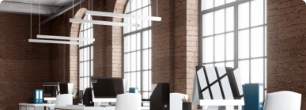
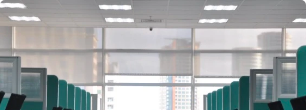
Commercial office lighting shapes how a workspace looks, feels, and performs. Because offices are occupied for long hours and mix focused desk work, meetings, and shared spaces, they need bright, even, low-glare light that keeps people comfortable and productive while holding down energy costs. LED is the standard choice, pairing high efficiency with excellent light quality and easy controls. At Warehouse-Lighting.com, we carry the full range of office fixtures — flat panels, troffers, recessed downlights, suspended linear, and more. Explore office fixtures by type below.



0 products

Productive, Comfortable Office Lighting
Offices run long hours and mix focused desk work with meetings and shared spaces. The right layout of flat panels, recessed, and suspended fixtures delivers bright, even, low-glare light that keeps people comfortable and productive — paired with controls to dim, schedule, and save energy.
Choosing the Right Office Lighting
Most offices layer a few fixture types, matched to how each area is used:
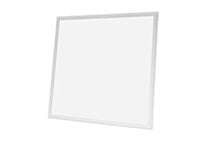
- Open work areas: Flat panels and troffers drop into a grid ceiling for bright, even, low-glare coverage.
- Private offices & conference rooms: Recessed downlights and suspended linear fixtures give a clean, comfortable, professional look.
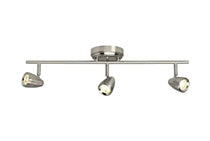
- Lobbies & corridors: Track lighting and recessed accents highlight reception areas, artwork, and signage.
- Task & desk areas: Under-cabinet and task lighting adds focused light where people work.
- Egress & safety: Exit signs and emergency lights keep the office code-compliant and safe during outages.
Key Considerations for Office Lighting
- Glare control: Low-glare lenses and good fixture placement reduce eye strain and reflections on screens — important for desk-heavy spaces.
- Color temperature: 3500K–4000K neutral white is the office standard — alert but comfortable. Cooler 4000K–5000K suits detailed task areas.
- Even distribution: A proper layout keeps light uniform across desks and walkways, avoiding bright spots and shadows.
- Controls: Occupancy sensors, dimming, and daylight harvesting cut energy use and are often required by commercial energy codes.
- Efficiency & rebates: LED fixtures lower energy bills and many qualify for utility rebates.
Benefits of LED Office Lighting
- Lower energy costs: LED draws far less power than fluorescent troffers, and rebates can offset upgrade costs.
- Better comfort & productivity: Even, low-glare, good-quality light reduces eye strain and fatigue.
- Low maintenance: Long LED life means fewer relamps and less disruption to the workday.
- Controls-ready: Easy to pair with sensors and dimming for automated, code-compliant efficiency.
- Instant-on: Full brightness immediately, with consistent color across the space.
Office Lighting FAQs
What is the best lighting for an office?
Most offices use a layered approach: flat panels or troffers for even light in open work areas, recessed or suspended fixtures in private offices and conference rooms, track or accent lighting in lobbies, and task lighting at desks. LED is the standard choice for its efficiency, comfort, and controllability.
What color temperature is best for an office?
3500K to 4000K neutral white is the office standard — it keeps people alert without feeling harsh. Cooler 4000K to 5000K light works well in areas with detailed or technical tasks.
How do I reduce glare on computer screens?
Choose low-glare fixtures, distribute light evenly, and consider indirect or suspended fixtures that bounce light off the ceiling. Good layout and placement matter as much as the fixture itself.
How bright should office lighting be?
General office areas often target around 30 to 50 footcandles (roughly 300 to 500 lux), with conference rooms and detailed task areas sometimes needing more. The right level depends on the space and desk layout — we offer free lighting layout help.
Can office lighting be put on sensors or dimmers?
Yes. Occupancy sensors, dimming, and daylight harvesting are common in offices and are often required by energy codes. They reduce runtime in unoccupied or daylit areas for significant energy savings.
Why should I switch office lighting to LED?
LED uses far less energy than fluorescent lighting, lasts much longer with less maintenance, turns on instantly, and provides better, more comfortable light. Many fixtures also qualify for energy rebates.