High Bay LED Lighting
 Industrial Low Bay Lighting
 Industrial Strip Lights
 Vapor Tight Lighting
 LED Shop Lights
 LED Ready Fixtures
 Hazardous Area / Explosion Proof Lighting
 Loading Dock Lights
 Construction / Portable Lighting
 High Temperature LED Lights
 Industrial Ceiling Fans
 LED Work Lights
 Networked Controlled Lighting
 American Made Industrial Lighting
 Clearance
 Troffer Lights
 LED Flat Panel Lights
 Drop Ceiling Lights
 LED Ready Troffers
 Suspended LED Lights
 LED Cylinder Lights
 Stairway & Corridor Lighting
 Hospital Bed Lights
 Wrap Lighting Fixtures
 Gooseneck and Barn Lights
 Commercial Sign Lights
 LED Track Lighting Fixtures & Systems
 Recessed Lighting
 Wafer Lighting
 RGB LED Lights
 Exit / Emergency
 Refrigeration Lighting
 Grow Lights
 UV Disinfecting Lights & Air Purifier Fixtures
 American Made Commercial Lighting
 LED Flood Lights
 Outdoor Wall Lights
 LED Area Lights
 Parking Lot Lights & Poles
 Outdoor Post Top Lights
 LED Stadium Lighting
 Canopy Lights
 Security & Motion Sensor Lights
 LED Bollard Lights
 Outdoor Barn Lights
 Solar Powered LED Lighting
 Dusk to Dawn Lights
 Landscape Lighting
 Outdoor String Lights
 Coastal Wildlife Lighting
 Outdoor House Lights
 American Made Outdoor Lighting
 Architectural Linear Lights
 Architectural Grid Mount Lights
 Architectural Round Pendant Lights
 Architectural Square Linear Lights
 Architectural X-Shaped Linear Lights
 Architectural LED Wall Packs
 Ceiling Fans
 Ceiling Lights
 Chandelier Lights
 Pendant Lighting
 Island Lights
 Under Cabinet Lighting
 Vanity Lights
 Wall Sconces
 LED Tape Lights
 LED Mirrors
 LED Light Bulbs
 LED Tube Lights
 LED Corn Lights
 Vintage LED Bulbs
 Decorative LED Bulbs
 Fluorescent Light Bulbs
 Metal Halide Lamps
 LED Magnetic Strip Retrofit Kits
 LED Strip Light Retrofit Kits
 High Bay LED Retrofit Kits
 LED Troffer Retrofit Kits
 LED Wall Pack Retrofit
 LED Street Light Retrofit Kits
 Recessed Lighting LED Retrofit Kits
 WareSense Blue - Bluetooth Control System
 Ballasts & Drivers
 Emergency Ballast For LED & Fluorescent Lights
 Electrical Supplies & Mounting Kits
 Electrical Tools
 Switches & Receptacles
 Electrical Power Cords
 Sensors and Timers
 Smart Home Automation
 High Bay Occupancy Sensors
 Electric Vehicle Chargers
 Hand Dryers
 LED Shop Lights
 Garage LED Lighting
 Gym Lighting
 Factory Lights
 Restaurant Lights
 Office Lights
 Classroom Lights
 Church Lights
 Warehouse Lights
 Hospital Lights
 Walkway Lights
 Parking Lot Lights
 Exterior Building Lights
 Sports Lighting
 Airport Lights
 NSF Rated Lights
 TAA LED Lighting
 Corridor Lights
 Barn Lighting
 Multi-Family Lighting Solutions



LED hallway and corridor lighting illuminates the transitional spaces in commercial buildings — offices, schools, hospitals, hotels, and apartment buildings — with bright, even, energy-efficient light that improves safety, wayfinding, and appearance while lowering energy and maintenance costs. The right fixtures depend on the ceiling type, corridor length, and whether the space calls for clean architectural lines or straightforward utility lighting. Because corridors often run around the clock, they're also one of the best places to cut energy use with LED and occupancy controls. Below are the fixture types used most in hallways and corridors, how to choose them, and answers to common questions.


0 products

Lighting Built for Hallways & Corridors
From bright, even office and school corridors to back-of-house service halls, the right fixtures keep every path safe, welcoming, and efficient. Match the fixture to your ceiling below, and add occupancy controls to cut the cost of lighting spaces that run around the clock.
Best Lighting for Hallways & Corridors
Hallways and corridors call for even, comfortable light with no dark spots between fixtures. The right choice depends on your ceiling and the look you want:
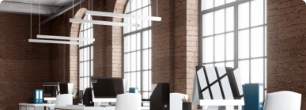
- Suspended Linear: Continuous-run linear fixtures create clean, modern lines down a corridor — ideal for offices, lobbies, and architectural spaces with open or higher ceilings.
- Flat Panels & Troffers: The go-to for drop (grid) ceilings, delivering soft, low-glare light in schools, offices, and healthcare corridors.
- Recessed Downlights: A clean, flush look for hard ceilings; space them evenly for smooth, uniform coverage down the hall.
- Strip Lights: Simple, durable, cost-effective lighting for back-of-house corridors, stairwells, parking structures, and service hallways.
- Wall Sconces: Wall-mounted accent and wayfinding light for hotel, multifamily, and hospitality corridors where appearance matters.
- Exit & Emergency: Corridors are typically part of a building's means of egress, so code generally requires exit signs and emergency lighting along the path.
How to Choose LED Hallway & Corridor Lighting
- Ceiling type: Drop/grid ceilings suit flat panels and troffers; hard ceilings suit recessed downlights or surface-mount linear; open ceilings suit suspended linear.
- Even coverage: Plan fixture spacing for uniform light with no dark gaps — important for safety and a polished look in long corridors.
- Color temperature: 3500K–4000K (neutral white) is the typical choice for commercial corridors, balancing a clean, alert feel with comfort. Warmer 2700K–3000K suits hospitality and residential settings.
- Controls & sensors: Corridors often run continuously, so occupancy sensors and bi-level dimming deliver some of the fastest energy paybacks in the building.
- Emergency & egress: Because corridors are part of the path of egress, plan for code-compliant exit signs and emergency lighting.
- Appearance: In public-facing corridors (hotels, lobbies, offices), fixture style and a consistent look matter as much as output.
Why Upgrade Corridors to LED
- Major energy savings: Corridors that run 24/7 burn a lot of hours — switching to LED, and adding occupancy sensors, cuts that cost dramatically.
- Less maintenance: Long LED life means fewer relamps in ceilings and stairwells that are disruptive to service.
- Better safety: Even, flicker-free light improves visibility and wayfinding along the whole path.
- A cleaner look: Modern, consistent fixtures upgrade the appearance of any corridor, from a hotel hallway to an office floor.
Hallway & Corridor Lighting FAQs
What is the best lighting for a hallway or corridor?
It depends on the ceiling. Drop ceilings typically use flat panels or troffers; hard ceilings use recessed downlights; open or architectural ceilings use suspended linear fixtures. Utility and back-of-house corridors often use strip lights, and hospitality corridors add wall sconces for appearance.
What color temperature should corridor lighting be?
3500K to 4000K (neutral white) is the common choice for commercial corridors, giving a clean, alert feel. Warmer 2700K to 3000K is often used in hotels, multifamily, and residential corridors.
Do corridors need emergency and exit lighting?
Usually yes. Corridors are typically part of a building's means of egress, so code generally requires exit signs and emergency lighting along the path. We carry code-ready exit signs and emergency lights.
How can I save energy in corridors that are lit around the clock?
Switch to LED and add occupancy sensors or bi-level dimming. Because corridors run so many hours, controls deliver some of the fastest energy paybacks in a building.
How far apart should hallway lights be spaced?
Spacing depends on fixture output, mounting height, and the look you want, but the goal is even coverage with no dark gaps between fixtures. Our team can help you lay out spacing for uniform light.
Can someone help me choose corridor lighting for my building?
Yes. Our lighting specialists can help you spec fixtures and plan a layout for your hallways and corridors. Contact us and we'll be glad to help.