 High Bay LED Lighting
 Industrial Low Bay Lighting
 Industrial Strip Lights
 Vapor Tight Lighting
 LED Shop Lights
 LED Ready Fixtures
 Hazardous Area / Explosion Proof Lighting
 Loading Dock Lights
 Construction / Portable Lighting
 High Temperature LED Lights
 Industrial Ceiling Fans
 LED Work Lights
 Networked Controlled Lighting
 American Made Industrial Lighting
 Clearance
 Troffer Lights
 LED Flat Panel Lights
 Drop Ceiling Lights
 LED Ready Troffers
 Suspended LED Lights
 LED Cylinder Lights
 Stairway & Corridor Lighting
 Hospital Bed Lights
 Wrap Lighting Fixtures
 Gooseneck and Barn Lights
 Commercial Sign Lights
 LED Track Lighting Fixtures & Systems
 Recessed Lighting
 Wafer Lighting
 RGB LED Lights
 Exit / Emergency
 Refrigeration Lighting
 Grow Lights
 UV Disinfecting Lights & Air Purifier Fixtures
 American Made Commercial Lighting
 LED Flood Lights
 Outdoor Wall Lights
 LED Area Lights
 Parking Lot Lights & Poles
 Outdoor Post Top Lights
 LED Stadium Lighting
 Canopy Lights
 Security & Motion Sensor Lights
 LED Bollard Lights
 Outdoor Barn Lights
 Solar Powered LED Lighting
 Dusk to Dawn Lights
 Landscape Lighting
 Outdoor String Lights
 Coastal Wildlife Lighting
 Outdoor House Lights
 American Made Outdoor Lighting
 Architectural Linear Lights
 Architectural Grid Mount Lights
 Architectural Round Pendant Lights
 Architectural Curved LED Linear Lights
 Architectural Square Linear Lights
 Architectural X-Shaped Linear Lights
 Architectural LED Wall Packs
 Ceiling Fans
 Ceiling Lights
 Chandelier Lights
 Pendant Lighting
 Island Lights
 Under Cabinet Lighting
 Vanity Lights
 Wall Sconces
 LED Tape Lights
 LED Mirrors
 LED Light Bulbs
 LED Tube Lights
 LED Corn Lights
 Vintage LED Bulbs
 Decorative LED Bulbs
 Fluorescent Light Bulbs
 Metal Halide Lamps
 LED Magnetic Strip Retrofit Kits
 LED Strip Light Retrofit Kits
 High Bay LED Retrofit Kits
 LED Troffer Retrofit Kits
 LED Wall Pack Retrofit
 LED Street Light Retrofit Kits
 Recessed Lighting LED Retrofit Kits
 WareSense Blue - Bluetooth Control System
 Ballasts & Drivers
 Emergency Ballast For LED & Fluorescent Lights
 Electrical Supplies & Mounting Kits
 Electrical Tools
 Switches & Receptacles
 Electrical Power Cords
 Sensors and Timers
 Smart Home Automation
 High Bay Occupancy Sensors
 Electric Vehicle Chargers
 Hand Dryers
 LED Shop Lights
 Garage LED Lighting
 Gym Lighting
 Factory Lights
 Restaurant Lights
 Office Lights
 Classroom Lights
 Church Lights
 Warehouse Lights
 Hospital Lights
 Walkway Lights
 Parking Lot Lights
 Exterior Building Lights
 Sports Lighting
 Airport Lights
 NSF Rated Lights
 TAA LED Lighting
 Corridor Lights
 Barn Lighting
 Multi-Family Lighting Solutions




Safety, Glare and Environment
Three things drive fixture selection in an industrial building: whether the environment will destroy a standard fixture, whether the light quality supports the work being done, and whether the installation meets the regulations that apply to the space. Get the environment wrong and the fixture fails. Get the light quality wrong and productivity and eye strain suffer. Get the regulation wrong and it is an inspection problem.
Worker Safety
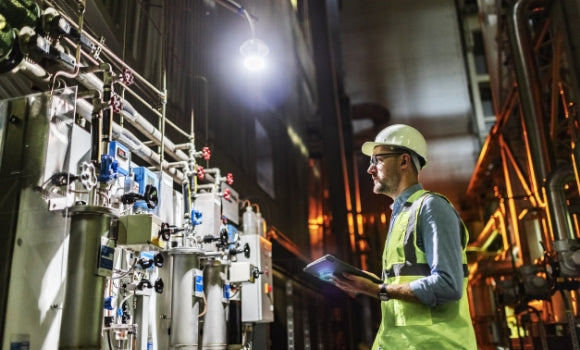
Proper factory lighting is indispensable for the safety and well-being of workers. Complying with lighting standards for manufacturing set out by the Occupational Safety & Health Administration (OSHA) in the U.S. or the International Organization for Standardization ISO is not just a regulatory requirement; it is central to worker safety.
Inadequate or poor-quality lighting leads to accidents, mishandling of equipment, and long-term issues like eye strain and fatigue. Well-planned industrial lighting improves visibility so workers can navigate the floor and execute tasks with precision. Emergency lighting and exit signage is a separate requirement, marking egress routes and hazardous areas for faster response in a critical situation. For the specific foot-candle minimums OSHA sets by area type, see our factory lighting standards guide.
Eliminating Glare and Shadows
Glare and shadow are the most overlooked aspects of industrial lighting, and both hamper visibility while contributing to eye strain and fatigue. Placement and orientation of fixtures matter more here than raw output. The aim is uniform illumination that reaches all corners and surfaces, leaving no room for shadow formation. In task-focused areas, supplementary task lighting offsets shadows cast by machinery or by the workers themselves.
Uniformity is worth more than average light level. A floor averaging 40 foot-candles with deep shadows between fixtures performs worse in practice than one averaging 30 evenly.
The Four Factory Fixture Types
Industrial facilities use four broad fixture families, and the choice between them is driven almost entirely by the environment rather than by preference. Below is what each one is built for, what to look for on the spec sheet, and the applications each suits.
1. LED High Bay Lights
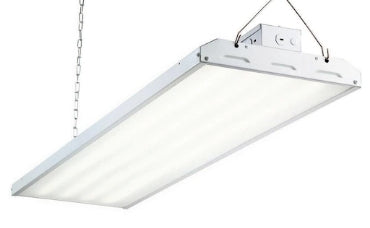
LED high bay lights are the default for open industrial space with ceilings of roughly 20 feet or more. Two shapes dominate: linear high bays, which follow rows of equipment or shelving, and UFO high bays, which are round and throw a wider, more symmetrical pattern. Below 20 feet, low bay fixtures give better spacing and less glare.
What to look for
- Lumens per watt: the efficacy figure that drives your operating cost
- Beam angle: narrow for tall ceilings and aisles, wide for open floor
- Selectable wattage and CCT: one part number covering several areas
- DLC listing: usually required for utility rebate eligibility
Best suited to
- Manufacturing and assembly floors
- Warehouses and distribution centers
- Loading and unloading areas
2. Explosion-Proof Lighting for Hazardous Locations
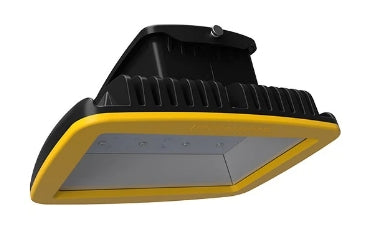
Explosion-proof LED fixtures are built to operate where flammable gases, vapors, liquids or combustible dust may be present. The housing is designed to contain and cool any ignition that occurs inside the fixture so it cannot propagate to the surrounding atmosphere. This is the one fixture category where the wrong choice is a safety failure rather than a performance one.
Understanding Class and Division
In the U.S., hazardous locations are classified under the National Electrical Code by what is present and how often. Getting this right is what determines which fixture you can legally install:
- Class I — flammable gases or vapors. Refineries, chemical plants, solvent handling, paint spray areas.
- Class II — combustible dust. Grain elevators, flour and feed mills, coal handling, metal powder processing, woodworking.
- Class III — ignitable fibers and flyings. Textile mills, cotton processing, sawmills.
Each class is then split by how often the hazard is present:
- Division 1 — the hazard is present during normal operation.
- Division 2 — the hazard is present only under abnormal conditions, such as a container failure or ventilation loss.
Division 1 fixtures are substantially more expensive than Division 2, so the classification of your specific area matters commercially as well as legally. Classification is determined by the facility, typically by an engineer or the authority having jurisdiction — not by the fixture supplier. Confirm your area classification before ordering, because a Division 2 fixture installed in a Division 1 area is a violation regardless of how it performs.
European and international projects use the ATEX and IECEx zone system instead of Class and Division. If you are specifying for a facility outside the U.S., or for a multinational operator, check which system governs.
What to look for
- Class, Division and Group markings on the fixture label, matched to your area classification
- Temperature (T) code: the maximum surface temperature, which must sit below the ignition temperature of the material present
- Housing material: typically copper-free aluminum or stainless steel
- IP rating: for dust and water ingress in the same environment
Best suited to
- Chemical plants and oil refineries
- Grain storage and handling facilities
- Paint, varnish and solvent manufacturing
- Woodworking and textile operations with airborne dust or fibers
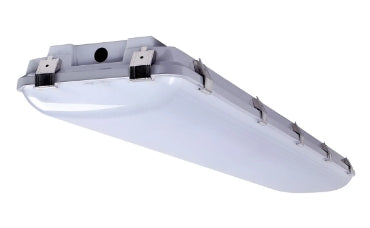
3. Vapor Tight Fixtures
Vapor tight fixtures are sealed against moisture, dust and vapor. They are not explosion-proof and should not be substituted for it — they solve a durability problem rather than an ignition one. Where a standard fixture would corrode, fill with dust or fail on a wash-down cycle, vapor tight is the answer.
What to look for
- IP rating: IP65 handles wash-down and driven rain; higher ratings for submersion or pressure washing
- Housing: fiberglass, polycarbonate or stainless steel for corrosion resistance
- Gasket material: check chemical compatibility if cleaning agents are aggressive
- IK rating: impact resistance where forklifts or moving equipment are nearby
Best suited to
- Food and beverage processing, especially wash-down areas
- Refrigerated and cold storage
- Car washes and outdoor loading docks
- Parking structures and tunnels
4. Task Lighting
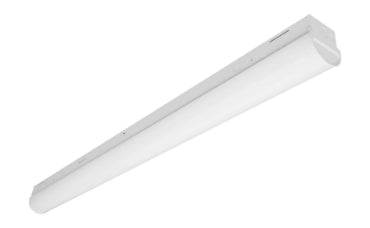
Task lighting is focused illumination at the point of work — inspection, assembly, reading gauges, fine detail. Overhead fixtures alone cannot deliver the light level a close-tolerance task needs, and the worker's own body casts a shadow onto exactly the surface they are working on. Commercial-grade strip lighting is the most common form in industrial settings.
What to look for
- High CRI: 90+ where color or finish is being judged
- Adjustability: so light can be aimed at the work rather than the bench
- Low flicker: important near rotating machinery, where flicker can make moving parts appear stationary
Best suited to
- Inspection and quality control stations
- Workbenches and assembly positions
- Machine shops and tool rooms
Frequently Asked Questions About Factory Light Fixtures
Below are the questions we get most often about specifying industrial fixtures. For light level targets and layout spacing, see our factory lighting standards and layout guide.
What is the difference between explosion-proof and vapor tight fixtures?
They solve different problems and are not interchangeable. A vapor tight fixture is sealed to keep moisture, dust and vapor out, which protects the fixture. An explosion-proof fixture is built to contain an ignition inside its own housing so it cannot ignite the surrounding atmosphere, which protects the building. A vapor tight fixture installed in a classified hazardous location is a code violation no matter how well sealed it is.
How do I know what Class and Division my facility is?
Area classification is determined by the facility, normally by an electrical engineer or the authority having jurisdiction, and it should be documented before fixtures are specified. Class describes what is present — gases and vapors are Class I, combustible dust is Class II, fibers and flyings are Class III. Division describes how often — Division 1 during normal operation, Division 2 only under abnormal conditions. Ask for the classification drawing rather than inferring it from the type of plant.
Why should I choose LED for a factory?
Higher output per watt, far longer life, no warm-up, and no flicker from a quality driver. The maintenance saving is the one that gets underestimated in an industrial building: re-lamping a fixture at 30 feet means a lift, a cleared floor area, and often after-hours labor, so cutting the frequency of that is worth more than the energy saving on many sites.
Are there rebates for upgrading factory lighting to LED?
Often, yes. Many utilities and states offer rebates on qualifying commercial fixtures, usually requiring a DLC or DLC Premium listing to pay out. Industrial rebates are frequently calculated per watt reduced, so a high bay retrofit across a large floor can return a meaningful share of project cost. Most programs require pre-approval before installation begins, so start that paperwork before the fixtures go up.
What is the typical lifespan of an LED industrial fixture?
Commercial LED fixtures are generally rated between 50,000 and 100,000 hours depending on the product, which at industrial run hours translates to years of continuous operation. Ambient temperature is the main variable — fixtures running in hot process areas or unventilated ceiling spaces will not reach the same figure as those in a climate-controlled building, so check the rated ambient on the spec sheet against the actual conditions.
Specifying Fixtures for an Industrial Facility?
Hazardous location and wash-down environments are where fixture selection gets expensive to get wrong. Our lighting specialists can match fixtures to your area classification and environmental conditions, confirm ratings against your spec, and provide free lighting design and layout assistance. Browse the full range or get in touch with your classification drawing and we will work from that.
Shop Factory LightingRelated Articles: Factory Lighting
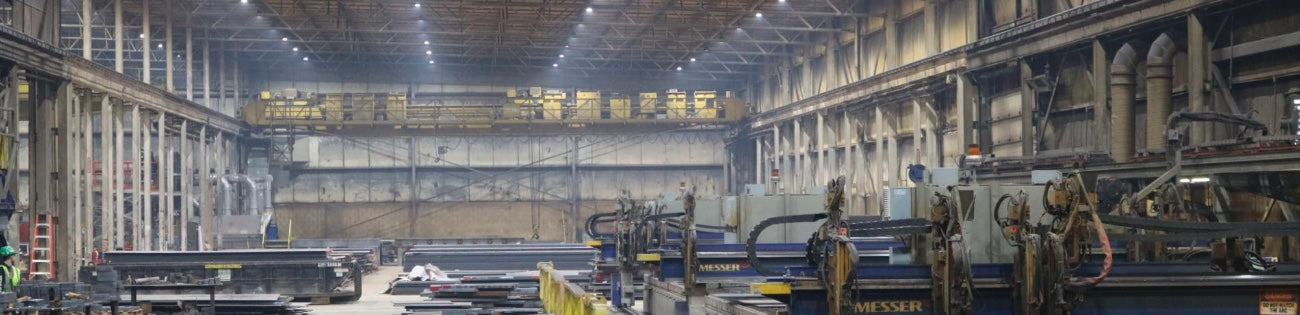
OSHA minimums, ANSI/IES targets, and lumen output and spacing by ceiling height.
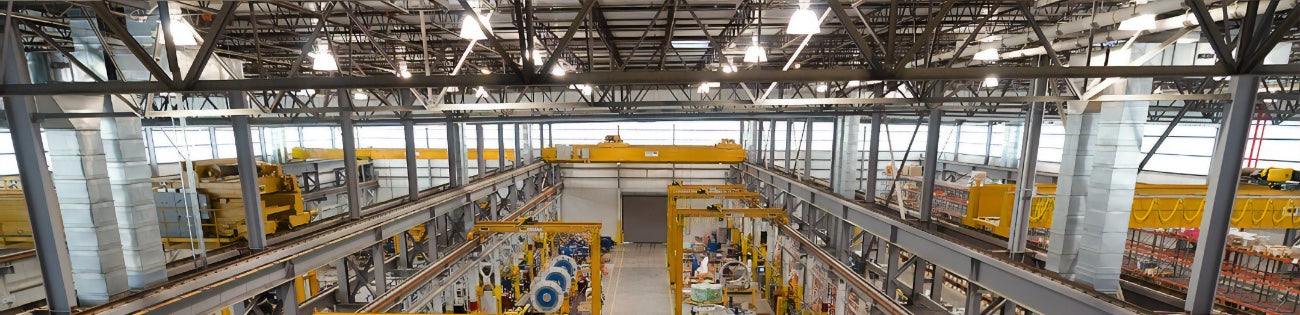
Explore our buying guide to find the best LED light fixtures for your business.
Get the 411 on everything you need to make a smart decision for your business or home.

Static LED UFO High Bay, 30,000 Lumens, 200 Watt, 5000K, 120-277V, Black Finish

CondorX Premium 2FT LED Linear High Bay, 24,640 Lumen Max, Wattage and CCT Selectable, 120-277V, Sensor Ready

2FT LED Compact Linear High Bay Fixture, 15,400 Lumen Max, Wattage and CCT Selectable, 120-277V

Aries G6 LED UFO High Bay, 22,500 Lumen Max, Wattage, CCT, and Optic Selectable, Black Finish, Comparable to 320-400 Watt HID Fixture, 120-277V

Shop High Bay LED Lights from Warehouse-Lighting.com. Our High Bay LED Lights offer superior illumination and efficiency, perfect for large industrial spaces.
View (272) Products
LED low bay lights for ceilings under 20 feet. Troffer, round UFO and retrofit options with free layout assistance on commercial projects.
View (39) Products
Shop commercial LED strip lights in staggered, continuous, and shop light configurations. Durable fixtures for warehouses, retail, and offices.
View (83) Products
WareLight Aries G6 LED UFO High Bay: Product Overview
Specs, options and model selection for the WareLight Aries G6 LED UFO high bay: selectable wattage, CCT and optics, up to 36,000 lumens, DLC Premium.
Watch Video
LED Condor High Bays: WareLight Product Overview
Watch Video
WareLight LED Vapor Tight High Bay: Product Overview
Watch Video

