High Bay LED Lighting
 Industrial Low Bay Lighting
 Industrial Strip Lights
 Vapor Tight Lighting
 LED Shop Lights
 LED Ready Fixtures
 Hazardous Area / Explosion Proof Lighting
 Loading Dock Lights
 Construction / Portable Lighting
 High Temperature LED Lights
 Industrial Ceiling Fans
 LED Work Lights
 Networked Controlled Lighting
 American Made Industrial Lighting
 Clearance
 Troffer Lights
 LED Flat Panel Lights
 Drop Ceiling Lights
 LED Ready Troffers
 Suspended LED Lights
 LED Cylinder Lights
 Stairway & Corridor Lighting
 Hospital Bed Lights
 Wrap Lighting Fixtures
 Gooseneck and Barn Lights
 Commercial Sign Lights
 LED Track Lighting Fixtures & Systems
 Recessed Lighting
 Wafer Lighting
 RGB LED Lights
 Exit / Emergency
 Refrigeration Lighting
 Grow Lights
 UV Disinfecting Lights & Air Purifier Fixtures
 American Made Commercial Lighting
 LED Flood Lights
 Outdoor Wall Lights
 LED Area Lights
 Parking Lot Lights & Poles
 Outdoor Post Top Lights
 LED Stadium Lighting
 Canopy Lights
 Security & Motion Sensor Lights
 LED Bollard Lights
 Outdoor Barn Lights
 Solar Powered LED Lighting
 Dusk to Dawn Lights
 Landscape Lighting
 Outdoor String Lights
 Coastal Wildlife Lighting
 Outdoor House Lights
 American Made Outdoor Lighting
 Architectural Linear Lights
 Architectural Grid Mount Lights
 Architectural Round Pendant Lights
 Architectural Curved LED Linear Lights
 Architectural Square Linear Lights
 Architectural X-Shaped Linear Lights
 Architectural LED Wall Packs
 Ceiling Fans
 Ceiling Lights
 Chandelier Lights
 Pendant Lighting
 Island Lights
 Under Cabinet Lighting
 Vanity Lights
 Wall Sconces
 LED Tape Lights
 LED Mirrors
 LED Light Bulbs
 LED Tube Lights
 LED Corn Lights
 Vintage LED Bulbs
 Decorative LED Bulbs
 Fluorescent Light Bulbs
 Metal Halide Lamps
 LED Magnetic Strip Retrofit Kits
 LED Strip Light Retrofit Kits
 High Bay LED Retrofit Kits
 LED Troffer Retrofit Kits
 LED Wall Pack Retrofit
 LED Street Light Retrofit Kits
 Recessed Lighting LED Retrofit Kits
 WareSense Blue - Bluetooth Control System
 Ballasts & Drivers
 Emergency Ballast For LED & Fluorescent Lights
 Electrical Supplies & Mounting Kits
 Electrical Tools
 Switches & Receptacles
 Electrical Power Cords
 Sensors and Timers
 Smart Home Automation
 High Bay Occupancy Sensors
 Electric Vehicle Chargers
 Hand Dryers
 LED Shop Lights
 Garage LED Lighting
 Gym Lighting
 Factory Lights
 Restaurant Lights
 Office Lights
 Classroom Lights
 Church Lights
 Warehouse Lights
 Hospital Lights
 Walkway Lights
 Parking Lot Lights
 Exterior Building Lights
 Sports Lighting
 Airport Lights
 NSF Rated Lights
 TAA LED Lighting
 Corridor Lights
 Barn Lighting
 Multi-Family Lighting Solutions



The Ultimate Guide to Light Your Gym and Arena with LED Lights
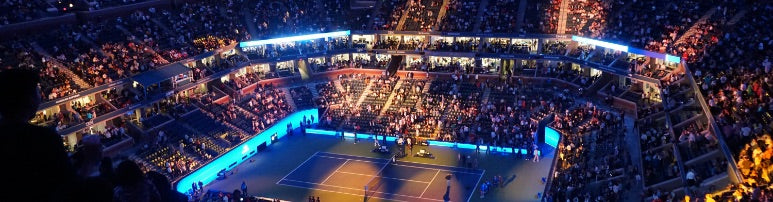
Warehouse-Lighting.com supplies commercial lighting for facilities of every size, from single-room studios to multi-court athletic complexes. Fitness facilities are one of the harder building types to light well: a single site can combine a high-ceiling workout floor, a wet pool deck, a low-ceiling locker room, and an outdoor parking lot, and each of those spaces has different light level, color temperature, and environmental rating requirements.
This guide walks through the interior and exterior spaces in a typical gym or arena, what to specify for each, and which fixture types fit. If you already know what you need, you can browse the full commercial gym lighting range directly.
Light Level Targets by Space
Light levels are measured in foot-candles (fc) at the working plane. The ranges below are typical design targets for fitness facilities. Confirm final numbers against IES RP-1, any governing sports association standard, and your local energy code before you specify.
| Space | Typical target (fc) | Color temperature | CRI |
|---|---|---|---|
| Weight and cardio floor | 30–50 | 4000–5000K | 80+ |
| Group fitness / studio rooms | 30–50, dimmable | 3500–4000K | 90+ |
| Locker rooms | 10–20 | 3500–4000K | 80+ |
| Restrooms and showers | 10–20 | 3500–4000K | 80+ |
| Indoor court, recreational | 30–50 | 4000–5000K | 80+ |
| Indoor court, competition | 50–75+ | 5000K | 80+ |
| Indoor pool deck | 30–50 | 4000–5000K | 80+ |
| Parking lot (average) | 0.5–2 | 4000–5000K | 70+ |
Interior Lighting
Interior spaces carry most of the perceived quality of a facility. Under-lit corners and mismatched color temperatures read as deferred maintenance even when everything is functioning. Uniformity matters as much as raw output: a floor averaging 40 fc with deep shadows between fixtures performs worse than one averaging 30 fc evenly.
Weight and Cardio Floors
Open workout floors with ceilings above roughly 20 feet are usually best served by LED high bay lights. Below that height, low bay fixtures give better spacing and less glare. Linear high bays suit rooms laid out in rows of equipment, since the beam distribution follows the aisles.
The most common complaint on a workout floor is glare from members lying supine on benches. Specify fixtures with diffusers or lenses rather than bare-aperture optics, and keep mounting heights consistent so the ceiling plane reads as uniform.

Group Fitness and Studio Rooms
Cycling, yoga, and class studios need dimming. These rooms run bright for setup and cleaning and dim for the session itself, so specify 0–10V dimmable drivers and confirm the control system supports the fixture count. Suspended LED fixtures work well where the ceiling is high enough to drop them, and recessed flat panels and troffers are the standard choice for drop-ceiling classrooms.

Locker Rooms
Locker rooms need even coverage without hot spots, mainly because uneven lighting creates dark aisles between locker banks where members feel exposed and where theft is easier. Place fixtures to light the aisles rather than the tops of the lockers, and keep them off-axis from mirrors to avoid reflected glare. Color temperature in the 3500–4000K range reads clean without feeling clinical. See our dedicated guide to locker room lighting for layout detail.
Pools, Restrooms, and Showers
Wet areas are where fixture selection matters most, and where the wrong choice causes a real failure rather than just a poor result. Specify fixtures rated for the environment: damp-location listing is adequate for restrooms with normal ventilation, but pool decks and shower rooms need wet-location listed fixtures, typically IP65 or better. Chloramine exposure around indoor pools also degrades standard housings over time, so check the finish and gasket materials against the manufacturer's chemical resistance data.
LED vapor tight fixtures are the workhorse for shower rooms and pool perimeters. For the pool deck itself, pool area lighting covers fixtures selected for that environment. Diffused optics matter here: water reflects, and a fixture that would be acceptable over a dry floor will produce disabling glare off a pool surface. Avoid pendant or suspended fixtures directly over water, both for the environmental rating and for maintenance access.
Indoor Courts
Indoor basketball, volleyball, and multi-sport courts have the tightest requirements in the building. Court lighting needs to meet three criteria at once:
- Adequate vertical illuminance so players can track a ball in the air, not just horizontal illuminance measured at floor level.
- Controlled glare in the sight lines players actually use, particularly looking up toward the rim and along the length of the court.
- Consistent color temperature and CRI across the full playing surface, which matters more if the space is ever filmed or streamed.
Recreational play is generally fine in the 30–50 fc range. Competition play, and anything being broadcast, moves up to 50–75 fc or higher, and adds flicker requirements that consumer-grade drivers will not meet. Browse basketball court light fixtures, or read our detailed guide to basketball court lighting requirements.

Exterior Lighting
Exterior lighting carries the security and liability load for the facility. Early-morning and late-evening members are arriving and leaving in the dark, and the parking lot is where most premises liability exposure sits.
Parking Lots
Parking lot design is governed by average maintained illuminance and, just as importantly, by uniformity ratio. An average of 1 fc with a 20:1 max-to-min ratio is worse for security than 0.7 fc at 4:1, because the eye adapts to the bright spots and the dark areas become effectively invisible. IES RP-8 is the reference standard.
Commercial light poles and parking lot lights cover pole-mounted fixtures and poles, and pole combo packages pair the two if you are specifying from scratch. For a straight one-for-one swap of existing HID heads, parking lot and street light retrofits keep the existing poles in place. Also check dark-sky and full-cutoff requirements, which are now written into ordinances in a growing number of municipalities. Our parking lot lighting guide covers layout and pole spacing in more depth.
Outdoor Courts and Fields
Outdoor courts follow the same illuminance and glare criteria as indoor courts, with weather rating added. Every fixture needs to be wet-location listed, and in coastal or high-humidity regions the housing finish matters for corrosion resistance. Indoor-rated fixtures installed outdoors will fail, and the failure mode is an electrical one.
Commercial outdoor LED flood lights handle most court and small-field applications. Larger fields and stadium-scale installations move to LED sports field lighting with aiming-specific optics. For a broader overview of specifying across sports applications, see our sports lighting buying guide.
Security and Building Perimeter
Entrances, loading docks, service doors, and walkways need continuous coverage rather than pooled light. Gaps between pools of light are where the perceived security problem lives, and they also defeat camera coverage: a camera set to expose for a bright entrance will render the adjacent dark stretch as unusable footage.
Commercial and industrial outdoor LED security lights cover motion-sensing and dusk-to-dawn fixtures for these areas. LED wall pack lights are the standard choice for building-mounted perimeter coverage, and full cutoff wall packs meet ordinances that restrict uplight. Inside, verify that exit signs and emergency lighting meet current code and that battery backup units are on a documented test schedule.
Specifying Your Gym or Arena Lighting
Most facility upgrades are phased rather than done all at once. If you are working through it in stages, the usual order is the workout floor first, since it carries the most member-visible impact per dollar, followed by exterior and parking, then locker rooms and wet areas. Retrofit kits are worth evaluating before full fixture replacement wherever the existing housings and poles are sound.
Browse the full commercial gym lighting range, or contact us for help with a layout, a photometric plan, or a quote on a multi-space project.